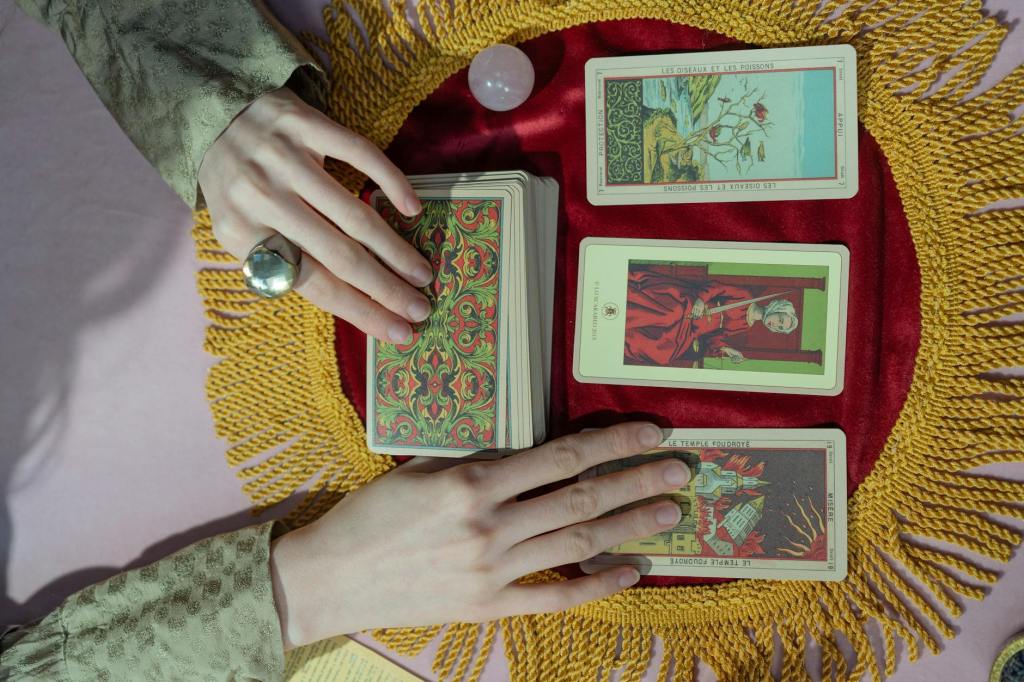
Some tarot cards just have the worst PR.
Pull The Tower? Is your house going to burn down? Pull The Devil, and suddenly you’re dousing the place in holy water and burning sage. Pull Death, and now you’re thinking about updating your will…
It’s easy to see why certain tarot cards get a bad reputation. They show up with pretty intense imagery. But the truth is, no tarot card is inherently bad. They just represent the more challenging, transformative parts of life.
I was reminded of this when I watched the 2024 horror movie Tarot a few months back. It was fun and campy, but it definitely played into the fear factor of tarot’s “scariest” cards. I still can’t get over The Magician being an actual murderous magician sawing someone in half to the lyrics, “I saw youuuuu…” (I mean, come on!)
But Hollywood exaggerations aside, let’s break down the most misunderstood tarot cards and what they actually mean.
In This Article
- The Cards That Make People Panic (But Shouldn’t)
- The Less-Scary But Still Misunderstood Cards
- What “Bad” Tarot Cards are Really Telling You
The Cards That Make People Panic (But Shouldn’t)
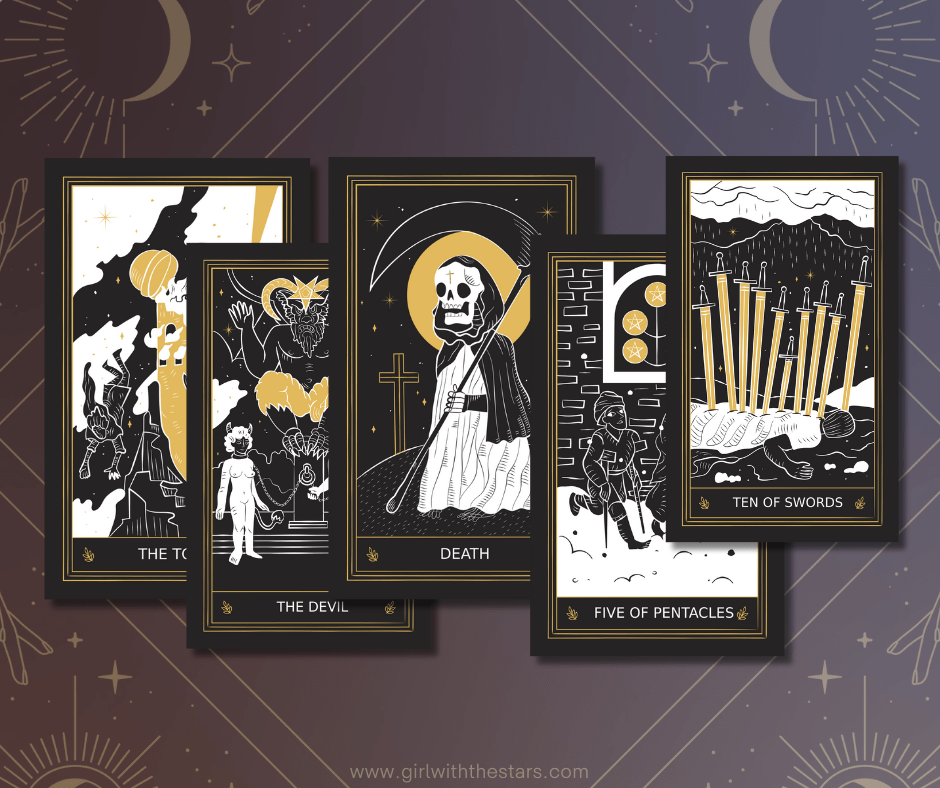
The Tower
This card looks terrifying. A burning tower, people tumbling to their doom. The looming fear that those people could be you.
So it’s a good thing that the Tower isn’t really about random disaster. It’s about breaking down false foundations. Though in a way, the two things can feel pretty similar in the moment.
Regardless, if something wasn’t built on truth, it’s going to come down eventually. It’s unsettling, but in the long run, that’s a good thing.
You wouldn’t want to live in a house that’s falling to pieces. Think of it as the universe doing some much-needed demolition so you can rebuild stronger.
Death
Listen…Death rarely means literal death. I truly wonder how many tarot readers have had to reassure their clients that just because they pulled a Death card, it doesn’t mean they’re going to die in a fortnight.
Despite the scary imagery on the card, the things that Death actually represents are pretty positive: transformation, endings, and new beginnings.
Something in your life is wrapping up. Maybe a job, a mindset, a phase. It might even be a difficult process. But in its place, something new can grow. It’s less of a “GAME OVER” screen, and more of…a reset button.
The Devil
No, The Devil card isn’t about actual demons lurking in the shadows. No, you don’t need to call the Vatican for an exorcism.
When the Devil appears, it’s more likely suggesting that you have been trapped by unhealthy patterns. Obsessions, addictions, toxic cycles. It calls you to recognize where you’re giving your power away.
And yes, The Devil can be positive (something I would rarely say out of context, as a former Catholic school girl LMAO)! Sometimes, this card can signal passion, indulgence, or the ability to break free from old chains.
Three of Swords
Nobody wants to see this card—three swords stabbing a heart? You don’t have to be a tarot reader to see that whatever’s going on there can’t be good.
I’ve read for a number of people in the last few years, and there’s no mistaking the dread I saw whenever they pulled this card.
But while the Three of Swords often signals pain, it also means clarity. It forces you to face what’s hurting you so you can heal. Sometimes, the truth hurts, but ignoring it hurts more.
Five of Pentacles
This card often represents financial struggles or isolation. That’s largely due to the fact that pentacles are inextricably linked to material wealth.
So, when this card appears, most people start getting incredibly anxious of any major life event rendering them in abject poverty.
As a result, people get even more obsessed with their finances. They go into survival mode even before their “troubles” have set in. But in their worry, they’ve essentially become the Five of Pentacles already.
If read too hastily, the Five of Pentacles can become a self-fulfilling prophecy.
It’s a difficult card to read or to receive, but it’s not a sentence to destitution; not unless you make it to be. But look closely—there’s always a light, a sign of help nearby. In times of trouble, this card reminds you that support is always there if you’re willing to reach for it.
Ten of Swords
If there were an award for Most Theatrical Tarot Card, Ten of Swords would win. A person lying face down with ten swords in their back? Yeah, that’ll do it. Visually, it’s the Ides of March: the Card.
But this card isn’t as grim as it looks. It means something painful is finally ending. The worst is over—there’s nowhere to go but up.
The Less-Scary But Still Misunderstood Cards

The Lovers
People assume The Lovers is all about soulmates and relationships. This card pops up and people think they’re on the cusp of starring in their own romcom with that cutie from the coffee shop.
But at its core, this card is about choices that shape you, and how you navigate conflicts or imbalances in ALL your relationships – romantic and otherwise.
The Lovers also has a lot to do with moral choices. Difficult but transformative decisions we must make.
It will ask you to reflect on your values and whether your decisions align with them. Love can be part of it, but so can big life choices, partnerships, and personal integrity.
Two of Cups
People tend to get really excited when this card appears too, especially in a love reading. But like the Lovers card, it’s other interpretations are often more interesting than what the surface suggests.
While The Lovers is about choices, the Two of Cups is about trust. Trust is the foundation of any deep, meaningful bond, not just romantic love.
This card can signal mutual respect, emotional balance, and even strong friendships or business partnerships built on trust.
At the same time, the Two of Cups can also warn you about dishonesty and potential duplicity in your partnerships.
The Rider-Waite-Smith illustration for this card actually features the caduceus – the wand of Hermes. Yes, Hermes is the god of communication – but he is also the god of tricksters and liars. You must always be wary wherever he looms about.
The Hierophant
This card can make people think of strict traditions and organized religion, but it can actually be about seeking wisdom from those who are older and wiser – and then growing from it to create something entirely new.
The Heirophant generally represents structure, mentors, and learning. Sometimes, it’s can be reminder to challenge outdated beliefs rather than blindly follow them.
So while people see this card and think of suffocating rules, my favorite reading of this card is the opposite: revolution. In the words of once Pablo Picasso: it’s learning the rules to know how to break them.
Seven of Swords
This card gets labeled as deception and betrayal, and while that’s sometimes true, it can also mean strategy. Sometimes, you have to be a little creative to get what you want.
Whether we like it or not, we’re bound to fall into situations where we gotta get clever, play our cards right, if we want to escape certain situations. Though sneaky need not mean full-out Machiavellian.
This card isn’t always telling you that you have to scam and swindle – but simply be tactful and choose your battles.
It doesn’t make you evil, and it doesn’t make this card the catchall for all nefarious plots out to get you.
Six of Cups
At first glance, Six of Cups seems sweet—childhood memories, familiar connections.
But past energy resurfacing isn’t always good. It can mean old wounds or patterns coming back for reflection.
Of course, the past is always more comforting. With hindsight, you know how everything ends. It is comforting, but you will never grow from there.
Whenever I pull this card, I always pair the sweetness with a warning: to look back at the past, but keep on walking forward. Look back, but never walk towards it.
What “Bad” Tarot Cards are Really Telling You
So why do we fear these cards so much? Maybe because we fear change. The unknown is uncomfortable, and these cards force us to face it. In the same way, some cards may appear favorable on the surface but actually carry warnings that we’ll often overlook.
Either way, tarot isn’t meant to spell your doom—it’s meant to guide. Even the most dramatic cards are just signposts, helping us navigate life’s twists and turns.
Next time you pull one of these so-called “bad” cards, take a deep breath. Instead of panicking, ask yourself: What is this trying to teach me?
Chances are, the answer isn’t as scary as you think.
✨ Enjoyed this post? Save it for later! ✨
Pin the image below to your favorite tarot or spirituality board on Pinterest! 📌🔮



Leave a comment