
Last year, I read Madeline Miller’s novel Circe, and it was a truly visceral experience. Stepping into the mind of an immortal who was so, so lonely—yet so powerful—made me realize just how isolating and empty an eternal life could be. How even the mystical can become mundane in such a vast stretch of time.
I’ve been meaning to share every interesting mythological tidbit about Circe that I discovered during my deep dive post-Miller’s Circe. Maybe even delve into how they’ve forever shaped my understanding of gender in practice of magick and witchcraft, and narratives surrounding it – from ancient times to this day.
So is this a rant? A review? Honestly, it’s mostly a tribute – to whom I believe is one of the most fascinating magical figures in Greek mythology.
Not Just the Witch from The Odyssey
Most people first encounter Circe in The Odyssey. You likely already know her as the cunning enchantress who turned Odysseus’s men into pigs and kept them on her island for a year.
But in the Homeric tradition, she was a goddess before a witch.
Circe was the daughter of Helios, the Titan sun god, and Perse, an Oceanid nymph. Unlike her other kin, she didn’t have brute strength, guiles, or even the mystifying beauty of other nymphs.
What she had was something far more dangerous: the ability to change reality itself. This power made the gods uneasy.
Magic in Greek mythology was often seen as subversive – manufactured, and therefore, outside their natural order. And so, Circe was exiled to Aeaea, a remote island where she could practice her craft away from the Olympians’ watchful eyes.
There she spent centuries refining her magic, learning its depths, and becoming one of the most skilled sorceresses in all of Greek mythology.
What Happens to Circe After?
Despite all the reimaginings and recharacterizations in modern retellings, Circe’s role in The Odyssey is pretty one and done. She detains Odysseus on her island for a year, he strikes her a deal, and she sends him on his way with a warning about Scylla and Charybdis.
In a way, I’m kind of thankful that that’s all they taught us in high school English class, cause what happens after that gets a bit…messy, to say the least.
According to Hesiod’s Theogony and other ancient sources, Circe and Odysseus actually had several sons. Agrius, Latinus, and Telegonus.
When Telegonus sails to Ithaca to find his father, he accidentally kills Odysseus with the very spear Circe had given him as protection. After realizing his mistake, Telegonus brings Odysseus’ body back to Aeaea, along with Penelope and Telemachus. Circe makes all three of them immortal.
By Athena’s advice, Telegonus marries Penelope and Telemachus marries…Circe. Yeah.
In later traditions, Circe even uses her magic to resurrect Odysseus. Telemachus later kills Circe during a quarrel (though it’s not exactly specified how he is able to do this, as Circe is still an immortal goddess).
This is also the part where I mention that in Lycophron’s Alexandra, Circe and Odysseus also have another child together: a daughter named Cassiphone.
Cassiphone – aptly named the “brother-killer” – kills Telemachus to avenge her mother. When Odysseus learns of this, he dies again, though this time of grief.
In The Telegony, a lost epic from the Trojan War cycle, Telegonus is led to settle in a city in Italy, founding Priniston (later Praeneste, now Palestrina).
Of course, I’ve skimmed through a loooot of details here, but the gist of it is that Circe’s “tragic character” streak really doesn’t get much better after her brief appearance in The Odyssey. As someone who absolutely loved the ending of Miller’s Circe, suffice it to say that I was horrified to know how her story actually remained for millennia.
Witchcraft in Greek Mythology

I mentioned earlier that the gods don’t take too kindly to witchcraft. You might ask: why? Certainly gods do some sort of magic – every one of them literally has extra special powers. Zeus shoots lightning bolts, for crying out loud!
Along with being seen as a dangerous undertaking, magic in ancient Greece was almost always tied to women. Circe is simply one of the most infamous today. Her sister Pasiphaë and her niece Medea are all regarded today as “witches” in the literary sense.
Medea was a sorceress who helped Jason steal the Golden Fleece and later killed her own children when he betrayed her. Her story is told in Euripides’ Greek tragedy named after her.
Pasiphaë was also adept in pharmakeia. When she grew tired of her husband King Minos’ constant affairs, she slipped him a potion that caused him to ejaculate scorpions and snakes whenever he slept with other women. After falling victim to Poseidon’s curse, she birthed the Minotaur.
Other mythical enchantresses, Medusa the Gorgon, Calypso the nymph, even Helen of Troy with her potions that one time—are portrayed as dangerous seductresses who wielded their power to manipulate men.
Even lesser-known witches like Alcimede and Agamede are depicted as cunning and scheming rather than wise.
But where are the male witches? The “evil” warlocks? Very scant mention of them, I’ll tell you that. Circe’s brothers, Aeëtes and Perses, were technically pharmakis as well—but they were first and foremost kings. Hermes, one of the few male gods associated with magic, was known more as a messenger than a sorcerer – more magician, than warlock.
Every time, they were gods more than sorcerers. Powerful and respected even more so because of their magic, not in spite of. Men’s magic was seen as an extension of their authority, while women’s magic was seen as a threat to it.
Because witchcraft was only ever worth fearing when power was wielded by women.
Circe vs. Hekate: Who Came First?

Some would call Hecate (or Hekate) the first witch, but that all depends on how you define a witch. Do they have to be mortal, or can they be divine? Do they have to train in the art, or be born with it?
First of all, Hecate was a chthonic goddess of witchcraft. That means her magic was tied to the underworld, ghosts, and necromancy. In some versions, she is even regarded to be Circe’s mother!
Circe’s power, on the other hand, was rooted in pharmakeia, meaning she was also highly skilled not just at sorcery and witchcraft but also medicine, poison, and drugs.
This is where the modern term “pharmacy” actually comes from. It literally used to mean a “preparer or dispenser of drugs and poisons.” Her form of witchcraft is also the one that we associate most with Green Witchcraft.
Through her magical drugs and herbs, Circe was able to become a master of illusion and transmutation.
This was how she could turn men into swine, summon spirits from the underworld, and manipulate perception itself. She held no enchanted quiver nor wand, nor sacred garment.
In essence, Circe was the first to learn witchcraft, at least in Western literature. Hecate’s magic was primal and absolute. But in every version of her tale, Circe’s magic was hard-won through trial and error.
While they are both divine beings, Hecate was the one who had actual dominion over magic and witchcraft. Circe is certainly called the “goddess of magic and herbs” now, but that is due in no small part to her mastery of witchcraft, which she honed for lifetimes. Even so, she remains a minor goddess – powerful indeed, but she does not actually have any rulership over it, as Hecate does.
Finding the Cult of Circe

In Italy, the village of San Felice on Mount Circeo is said to be where Aeaea, Circe’s ancient island, once stood.
According to Strabo, Circaeum was known for its abundance of roots – and small wonder why! There’s even a temple of Circe, an altar to Athena, and a bowl supposedly linked to Odysseus.
Circe’s magic was physical, practical, and rooted in the natural world. According to various versions of her mythology, she was a master of:
- Binding
- Herbalism
- Illusion
- Knot Spells
- Love Magic
- Necromancy
- Phylactery (protective magic)
- Potions
- Purification
- Root Cutting
- Transmutation
- Truth Spells
As you can tell, her craft was hands-on, physical, even laborious at times. That’s why so many modern lovers of witchcraft find her myth so fascinating. That kind of power feels attainable. Perhaps that’s what makes it so compelling.
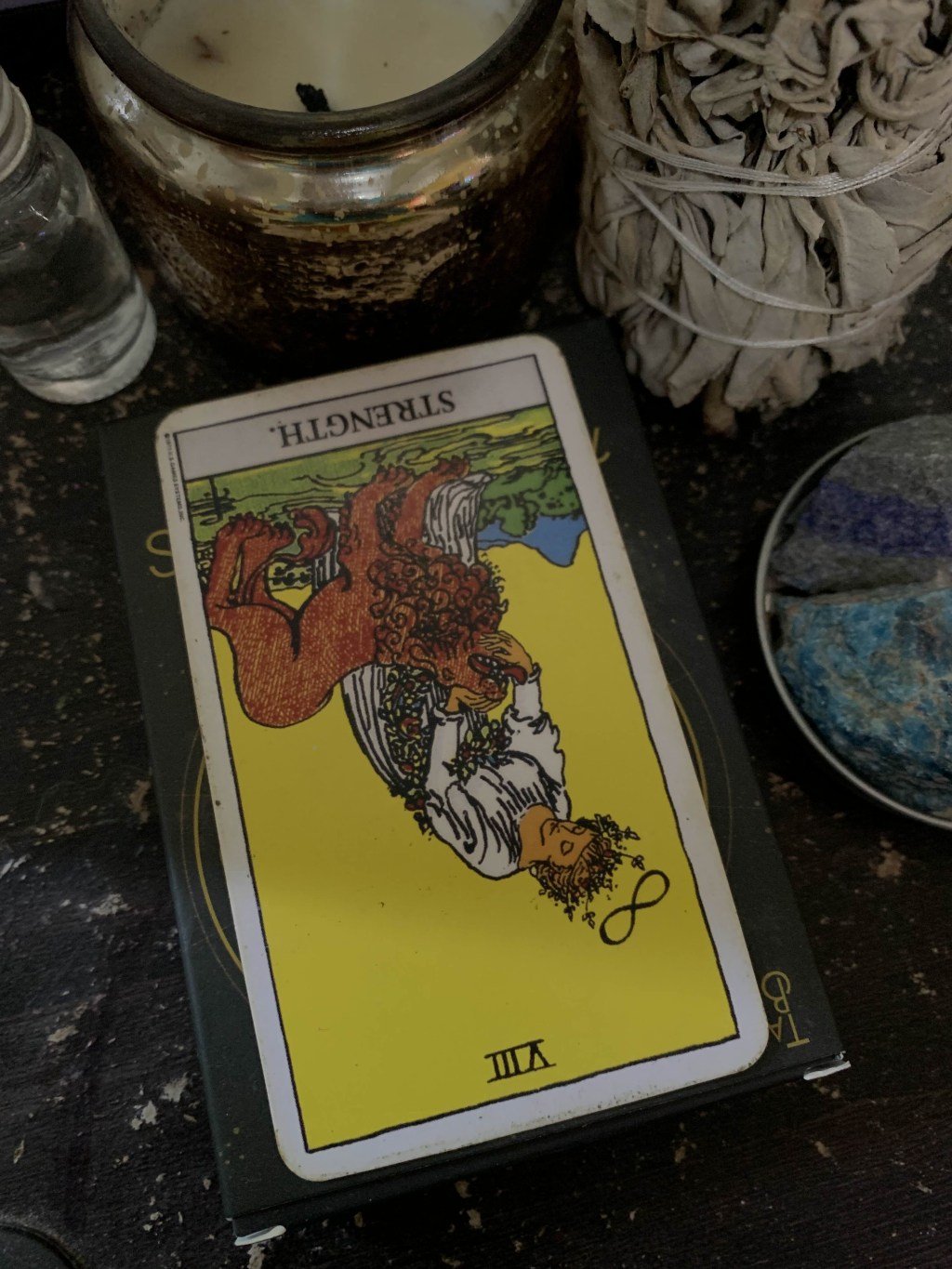
But as I dug deeper, I realized something interesting – or rather, something missing. Despite being regarded as the first witch of Western literature, Circe doesn’t have much of a presence in tarot or astrology – not nearly as much as other mythological figures.
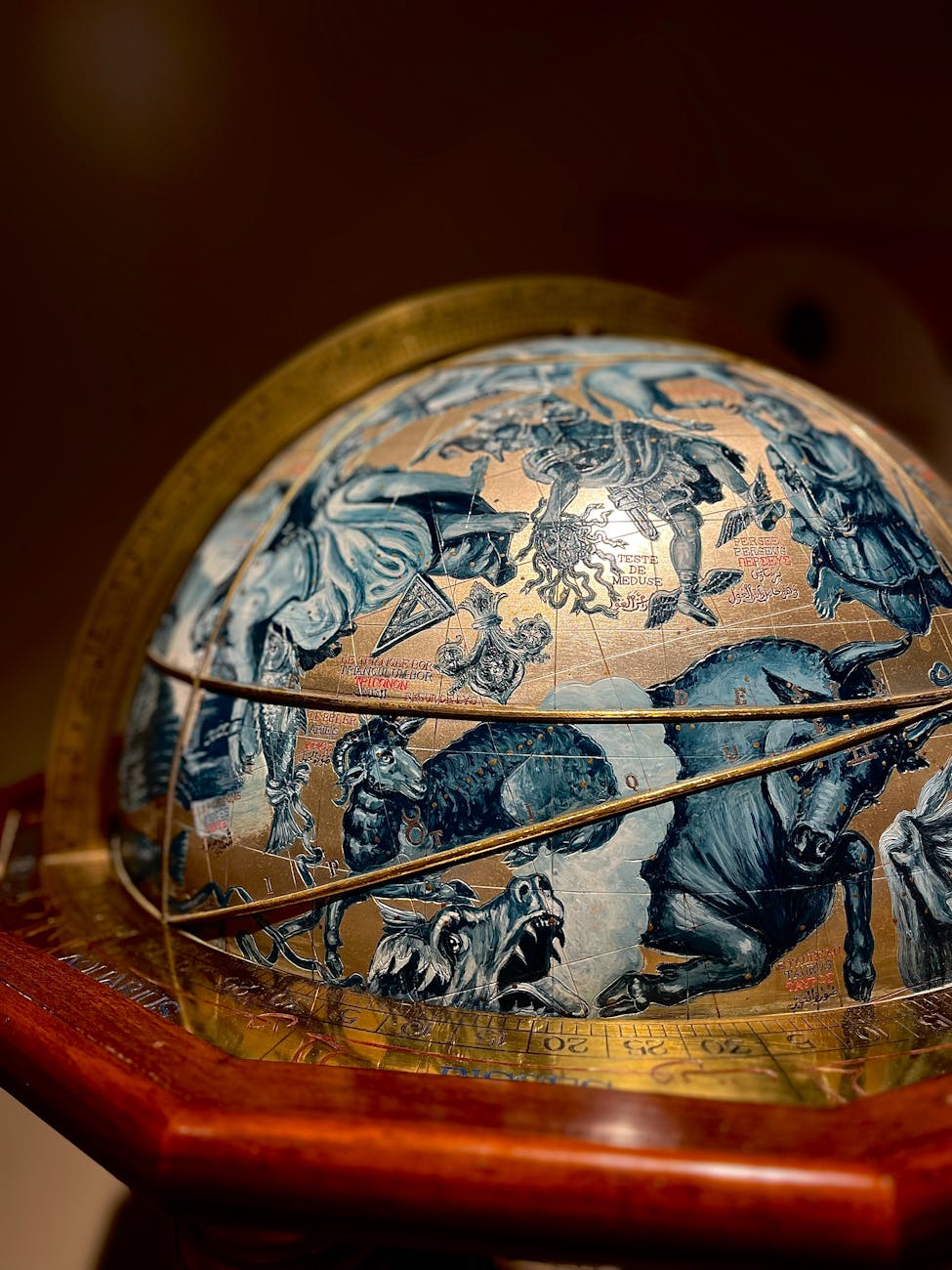
You could argue that it makes sense. Despite her appearances in several Greek myths and plays, she was a minor goddess. Half Titan, half Oceanid. In astrology, the big names with rulership over zodiac signs are Olympians, not nymphs.
Circe does have an asteroid named after her, but even that feels obscure and elusive. You couldn’t even find her in a birth chart!
After scouring the internet for days, I found mentions of Circe in some pagan practices and witchcraft blogs—prayers, invocations, and spells dedicated to her. But other than that, she remains curiously absent. Even in her own territory, it seems like Circe is still in exile.
Final Thoughts
It’s been a couple of months, but Circe’s story has stayed with me ever since. In Miller’s story, she was cast aside for being different – for being defiant. In the mythology beyond, she is cast aside still, her story watered down, and largely forgotten. Until today.
The more I went over each text and source, I came to realize just how her story resonates so much with modern women. I mean, aside from her turning suspicious, trespassing men into pigs.
But really, there’s a certain comfort in your own company, in pouring yourself into the things you love even when no one else is watching.
Whether it’s tending to your plants, painting, writing, practicing witchcraft, or just getting lost in your own little world—there’s magic in that. And it’s yours.
So this Women’s Month, I want to celebrate her story—the first witch—and all the women like her. The ones who keep building, learning, growing. The ones who refuse to be tamed. The ones who know that even if the whole world turns against them, that quiet magic they’ve made for themselves is something no one can ever take away.
If you haven’t picked up Miller’s Circe yet, I beg you: give it a try. You might find more of her story resonates with you than you expect. As always, feel free to comment your thoughts below, whether on the novel or on the actual myths surrounding Circe.
And if mythology, astrology, and tarot intrigue you, I talk loads more about it on my blog! There’s so much more to uncover—how ancient myths connect to the zodiac, how these stories shape our understanding of ourselves, and how the stars have guided us for centuries.
✨ Enjoyed this post? Save it for later! ✨
Pin the image below to your favorite tarot or spirituality board on Pinterest! 📌🔮





Leave a comment