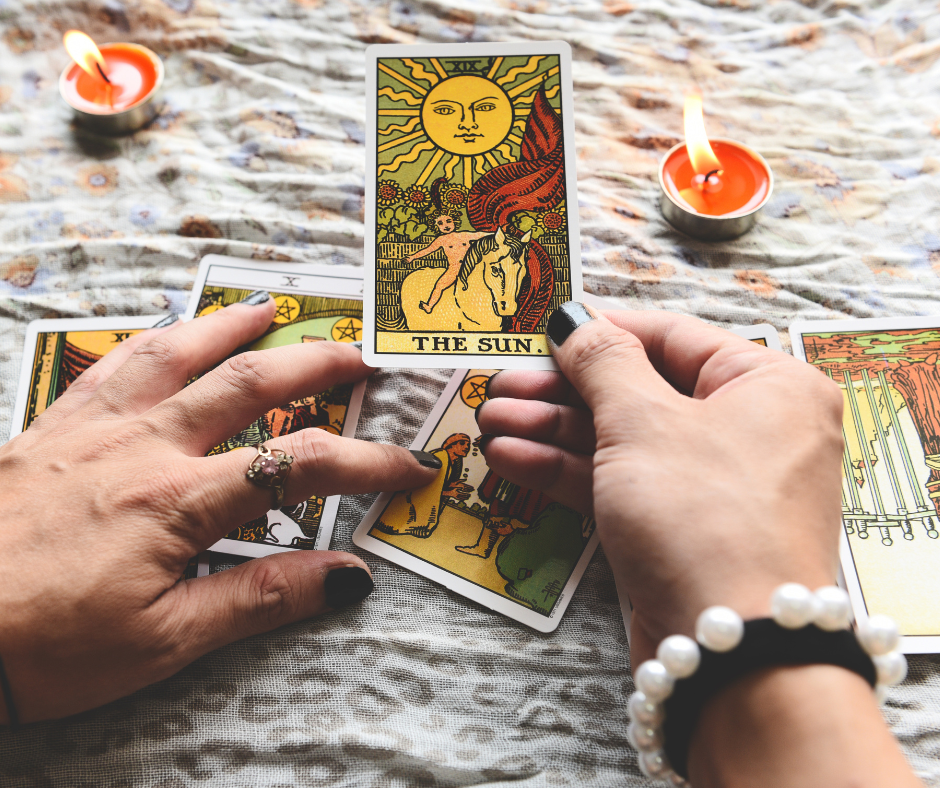
Tarot is a tool for insight, self-reflection, and guidance. It consists of 78 cards—22 Major Arcana and 56 Minor Arcana, each of them reflecting different aspects of life.
But like I always tell people: learning the Major Arcana takes time—years, if we’re being honest.
I’ve been properly studying tarot since 2022, and even after all the readings I’ve done, I’m still learning how the meanings shift depending on the question, the surrounding cards, and even my own emotional state.
No matter how many times you try to memorize every possible interpretation, the same card can feel completely different depending on the context of the reading.
That’s why I’ve put together these quick tips—not just to help you memorize the Major Arcana, but to truly understand them at a deeper level.
In This Article
- Tip #1: Break Each Card Down to Basics
- Tip #2: Take Note of the Imagery
- Tip #3: Practice with Storytelling
- Strengthen Your Tarot Instincts
Tip #1: Break Each Card Down to Basics
During readings, people always ask me: how’d I even learn all this? Did the cards come with a manual? Did I memorize said manual? Short answer: yes and no (though I tried my best, I’ll tell you that for free!)
But here’s what I’ve learned so far. Understanding the Major Arcana is less about memorizing keywords, and more about recognizing the patterns. The best way to find patterns is to break things down.
For the Major Arcana, this meant brushing up on two related practices: numerology and astrology.
Numerology
Each Major Arcana card has a number, and that number gives you insight into where the card fits within the Fool’s Journey.
Even if you’re not deep into numerology, knowing the basics helps you understand the flow of a reading.
Here’s my quick cheat sheet for numerology in the Major Arcana:

But there are 22 cards in the Major Arcana. What about the numbers past 10? What about 0?
In tarot, higher numbers are often reduced to their single digits, with the combination of each number’s meaning forming the message of the card or spread.
For example, if you pull The Chariot (7) and The Tower (16), you could reduce The Tower’s number (16 → 1 + 6 = 7) and see that both cards share the energy of the number 7—growth and willpower.
The Chariot reflects control and determination, while The Tower reflects the breaking down of false foundations. That shared number suggests that a major shift or breakthrough might be necessary for personal growth.
If that seems a bit too complicated, you can also just read the individual digits. The Tower’s 1 (new beginnings) and 6 (harmony) suggest that destruction can also serve as an equalizing force.
Looking at the numbers as layers of meaning helps you go beyond surface-level interpretations. I plan to go more in-depth with numerology in a future post, and eventually build my own resources dedicated to the practice – so stay tuned!
Astrology

Each card is actually linked to a zodiac sign or planet that shapes its energy and meaning. These astrological connections often point to the card’s core themes and how it interacts with others in a reading.
A quick refresher before we continue:
- Fire – Passion, action, and your personal power. Fire-driven cards push for movement, bold choices, and taking charge of your destiny.
- Water – Emotions, intuition, and the subconscious. Water-infused cards are deeply connected to themes of wisdom, dreams, and the ebb and flow of feelings.
- Air – Intellect, logic, and judgment. Air-aligned cards emphasize truth, clarity, and the power of communication or mental breakthroughs (or breakdowns).
- Earth – Stability, structure, and the material world. Earth-based cards deal with reality, discipline, tradition, and long-term growth.
While elements are more prominent in the Minor Arcana, they still influence the Major Arcana through these astrological ties.
Some cards make these links obvious, while others can be a bit sneaky. Here are a few:
- The Emperor features the Aries symbol, which immediately tells you it’s linked to fire and themes of authority and action.
- The Empress also features the Venus symbol. Combined with the lush earth surrounding the Empress in the illustration, this tells us that the card is ruled by Taurus.
- The Moon has a crayfish in the imagery, which could be a nod to Cancer (a water sign)—but it’s actually ruled by Pisces – the “dreamer” of the Zodiac.
- The Star features a woman pouring water into a lake – which is a clear reference to the sign Aquarius, the water-bearer.
Over time, the astrological and elemental associations will feel like second nature. If you need a place to start, my Major Arcana resources include the astrological associations of each card.
Recognizing these symbols helps you understand the card’s core energy even if you forget the textbook meaning.
And speaking of symbols…
Tip #2: Take Note of the Imagery
Tarot is a visual language, and the imagery is often more powerful than the traditional meanings. The symbols, colors, and figures on each card hold layers of meaning that will guide your intuition.
For example, The Death card often scares people, but if you look closely, you’ll notice a rising sun in the background. That’s a sign of transformation and rebirth—not literal death.
The Tower’s destruction might seem chaotic, but the crown falling from the top signals that false structures are being dismantled, clearing the way for truth and authenticity.
Even the positioning of the figures matters. The Hanged Man’s upside-down posture reflects a shift in perspective. The open posture and nakedness of The Star reflect vulnerability and hope.
One thing that really helped me was assigning certain “power phrases” to each card to capture its core energy. Instead of trying to memorize a list of adjectives, I’d sum up the card’s essence in a single statement, like so:

This method gave me a clearer sense of each card’s personality and purpose. It also helped me avoid confusion when meanings overlapped.
For example, both The Lovers and The Two of Cups can signify relationships, but The Lovers is more about choice and alignment (“I choose”), while The Two of Cups is more about emotional balance (“I connect”).
If you want to see the complete list of my “power phrases” for each card, check out my Major Arcana Resources.
| Bonus Tip: If you feel drawn to a particular detail—a color, an animal, or a symbol—it’s probably trying to tell you something. Trust your gut. Tarot is meant to work with your intuition, not against it. |
Tip #3: Practice with Storytelling

My favorite thing about The Major Arcana (aside from there only being 22 of them) is that it’s all just one story. And if there’s anything I love most as a writer, it’s a well-structured story with a beginning, middle, and end.
The Fool’s Journey mirrors the Hero’s Journey, where the Fool sets off on a path of self-discovery, meeting archetypes and challenges along the way.
You could interpret it as the Fool meeting each of the 21 figures as guides, or as the Fool becoming each figure until they reach The World, having transformed into a whole, enlightened person.
For example, you might pull The Fool, The Magician, and The High Priestess together. That tells a clear story of new beginnings (The Fool), stepping into personal power (The Magician), and turning inward for intuitive guidance (The High Priestess).
Thinking of the cards as characters in a story makes it easier to remember their meanings and how they interact with each other.
Storytelling helps you create a personal connection to the cards. Journaling your readings, writing out the story the cards are telling, or even practicing on friends will help you deepen that connection. Over time, the cards will start to speak to you in a language that feels natural.
| Did You Know? Tarot began in 15th-century Italy as tarocchi, with The Courtly Household Cards telling a story about life’s journey—from the Fool to the Pope. Originally a trick-taking game, it wasn’t linked to fortune-telling until the 19th century! |
Strengthen Your Tarot Instincts
Take it slow. The Major Arcana isn’t something you master overnight. Learn each card one at a time. Read. Journal. Meditate. Trust that your understanding will deepen over time.
Ready to sharpen those tarot skills? Check out my Tarot Resources for more insights, and explore my Card of the Day series for real-world examples of how the cards show up in everyday life.
✨ Enjoyed this post? Save it for later! ✨
Pin the image below to your favorite tarot or spirituality board on Pinterest! 📌🔮



Leave a comment