
Tarot cards already hold so much depth on their own—but what happens when one shows up upside down?
According to tradition, that reversal can shift the meaning or the energy of any given card. Some tarot readers swear by reversals, finding that they bring more nuanced and clearer readings.
Others prefer to read all cards upright, trusting that each card already carries a wide enough range of messages. So which is it really? Is there even a “right way” to read tarot cards?
Let’s go through those questions – one by one.
In This Article
- What is a Reversal?
- What Do Reversals Mean?
- Is There a Right or Wrong Way to Read?
- Why Some Tarot Readers Don’t Read Reversals
- Explore Tarot Your Way
What is a Reversal?
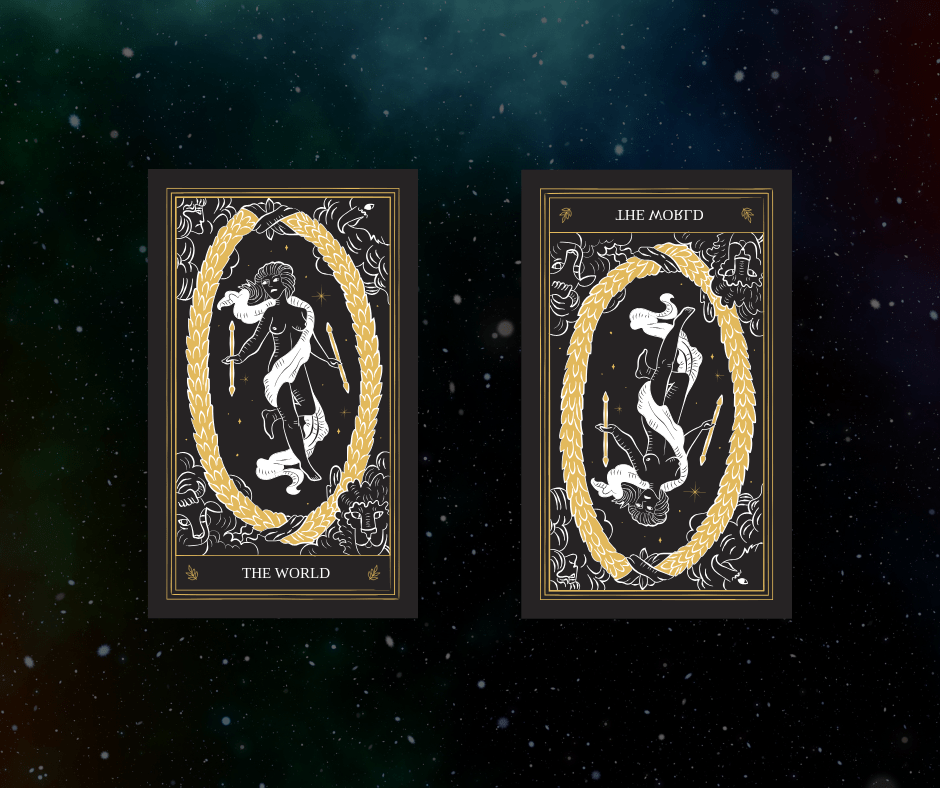
A reversal simply means that a tarot card appears upside down in a reading instead of upright. This can happen naturally when shuffling or if a reader purposefully includes reversed cards in their deck.
Reversals are often thought to modify a card’s meaning, but how they do so depends on the reader’s interpretation. Some tarot practitioners always read reversals, while others choose to ignore them entirely.
Some readers also experiment with placing a card sideways, which suggests an energy that’s in flux – neither fully upright nor fully reversed. It can also be read as something that contains both the “positive” and “negative” traits of a card.
In certain tarot spreads, this becomes a sort of “middle ground” where the interpretation depends on surrounding cards and the reader’s intuition.
What Do Reversals Mean?
So, do reversed tarot cards really change meanings? The short answer is: they can, but it depends on how you choose to interpret them.
Here are the most common ways readers approach reversals:
Opposite of the Upright Meaning
This is probably the most intuitive—and easiest—way to read reversals. In this case, we’re literally just “flipping” the card’s traditional meaning.
If The Sun upright generally represents happiness and clarity, The Sun reversed might suggest gloom, confusion, or temporary setbacks.
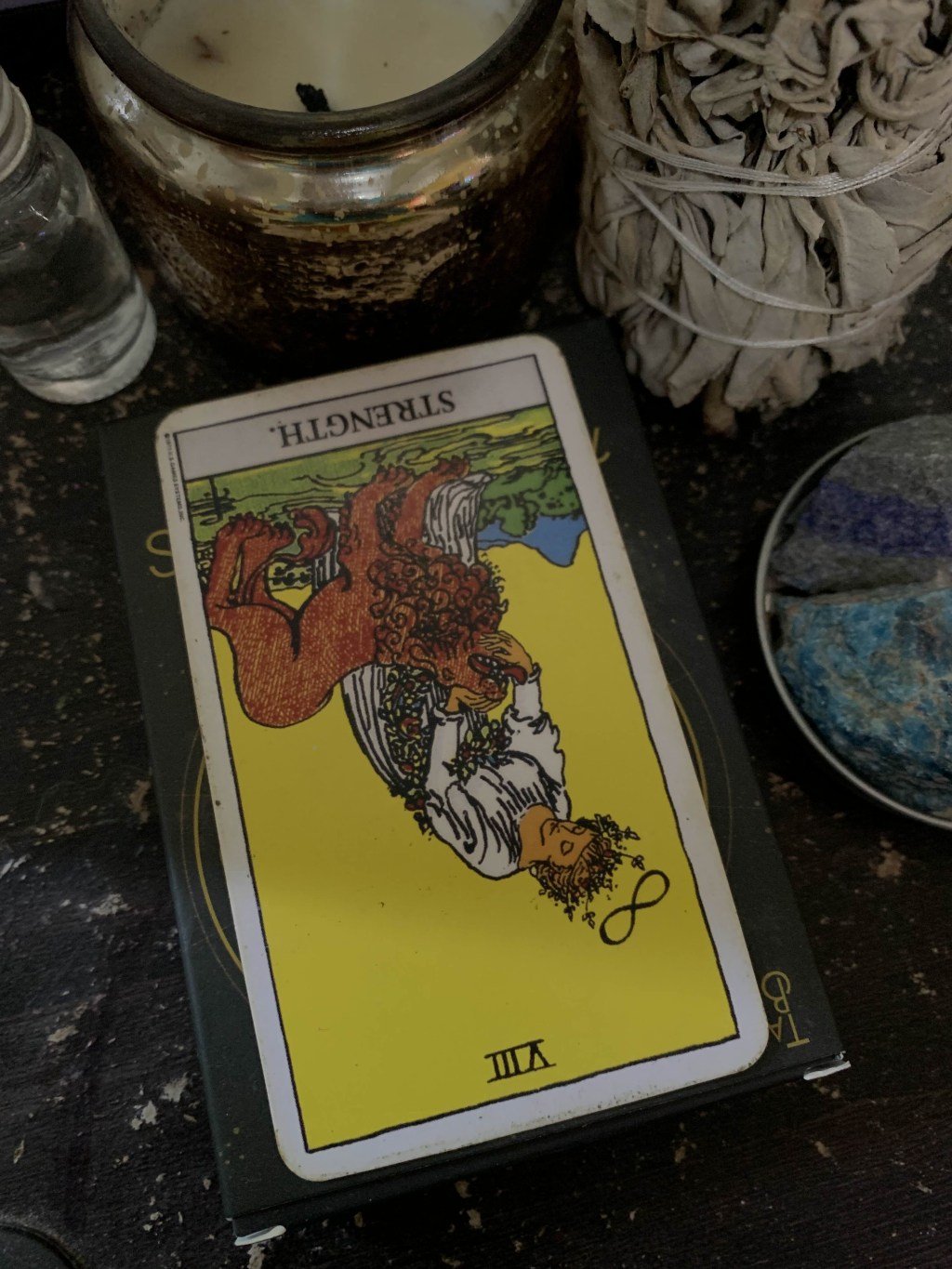
Strength upright shows resilience and courage, while reversed might point to fear or self-doubt. Justice upright signals fairness, and reversed could speak to dishonesty or imbalance.
It’s a useful method, especially for beginners. But be careful not to oversimplify. Not every reversed card is just a negative version of its upright counterpart.
Life isn’t always black and white, and tarot reflects that. A reversed card might still carry lessons, opportunities, or important inner processes—it’s not always a bad omen.
Taking reversals as strict opposites can sometimes lead to rigid or misleading interpretations. The key is to read within context—look at surrounding cards, the question being asked, and your own intuitive response.
Tarot is a language, and like any language, its words (or cards) take on different meanings depending on the conversation.
Blockage, Delay, or Resistance

Another popular interpretation is that a reversal shows a blockage or resistance to the card’s upright energy.
Think of it like static or interference—it’s not that the energy is gone, but it’s being delayed, challenged, or misdirected.
For example, The Chariot upright represents determination and momentum. When reversed, it could mean a lack of control, a struggle to progress, or feeling pulled in too many directions.
In this case, reversals can help highlight areas where growth is needed or where internal work might be more relevant than external action. This is where you (or your client) reflect on the following things: what is standing in the way? What needs to shift?
Inward or Subtle Version of the Upright Meaning
Instead of viewing reversals as purely negative, some readers interpret them as the same energy turned inward or expressed in a more muted, subtle, or internalized way.
They’re not necessarily the opposite of the upright meaning—just a subtler or more toned down version, all the while carrying the same lesson.
Let’s try a few examples.
We already know that The Hermit upright represents seeking wisdom, introspection, and inner guidance.
Reversed, it could suggest avoiding self-reflection or feeling isolated and disconnected. The message isn’t entirely lost—it’s just harder to access or being processed more internally.
This also applies to cards like the Queen of Swords, the embodiment of clarity and intellect when read upright.
When reversed, those qualities might be expressed more privately, or there may be a struggle to channel them constructively—perhaps clouded judgment, emotional defensiveness, or withdrawn communication.
The Five of Wands reversed, instead of signaling outer conflict, can point to internal competition, repressed tension, or passive-aggressive dynamics.
And with a card like The Tower, which upright represents sudden upheaval or destruction, the reversal might soften that blow—it could signal a more gradual breakdown or inner transformation, something less dramatic but still deeply affecting.
This style of interpretation is particularly helpful when you’re doing a reading focused on emotional or spiritual development, since it allows for more layered understanding.
Is There a Right or Wrong Way to Read?
There’s no official tarot rulebook, so whether you read reversals or not is entirely up to you.
In fact, plenty of tarot readers choose to only read upright cards. I personally like to use reversals because they add an extra layer of meaning, but I know many skilled readers who don’t, and their readings are just as insightful.
Tarot is a deeply personal practice, guided more by intuition and tradition rather than rigid rules.
Why Some Tarot Readers Don’t Read Reversals
While reversals can add depth to a reading, not everyone chooses to use them. We’ll run through some common reasons why most tarot readers might choose to stick with upright interpretations.
It Can Overcomplicate Readings

Tarot already has 78 cards to interpret, and reading reversals essentially doubles the number of meanings to keep in mind.
Some readers feel that adding reversals makes things unnecessarily complex, especially for beginners or for readings that need to be straightforward and to the point.
If a spread already has a clear message, a reversed card can sometimes throw things off balance instead of clearing things up.
Upright Cards Already Contain Dual Meanings
Every tarot card carries a “spectrum” of meaning, both positive and negative, even when upright.
The Fool, for example, represents adventure and optimism but also carries the potential for recklessness and naivety. The Tower upright signals upheaval, but it can also suggest “failing upwards.”
Since tarot is about storytelling and interpretation, many readers feel that reversals aren’t necessary to see both light and shadow aspects within a single card.
In an actual reading, the positive or negative traits will just become apparent depending on the context and question given. While this may sound easier, I would say reading this way is something best left to an experienced reader who is more familiar with the meanings of each card – especially those that seem “overly” negative at first sight.
Some Decks Aren’t Designed for Reversals
Not all tarot decks lend themselves well to reversed readings. If a deck relies heavily on imagery, flipping a card upside down can make the symbolism harder to interpret.
The Rider-Waite-Smith (RWS) deck, the most commonly used tarot deck, is readable both ways, but others—like the Thoth Tarot or Tarot de Marseille—use more abstract or minimalist artwork that doesn’t always support reversed meanings.
I recently got a Thoth Tarot deck, and I’m quickly learning how different it is from the RWS system.
In this deck, reversals don’t quite work the same way—especially for the Minor Arcana, which already have very specific meanings and keywords assigned to them.
The backs of the cards also aren’t symmetrical, so you can tell right away if a card is upright or reversed when it’s face down, which can unintentionally affect how you read it (or how your clients pick out cards from a spread!). With decks like this, reversals can feel more distracting than helpful.
If your deck is designed similarly, you might find that sticking to upright meanings gives you a cleaner, more intuitive experience—and that’s totally valid.
Reversals Can Disrupt the Flow of a Reading

Sometimes, a reversed card just doesn’t make sense within the context of a spread. Intuition plays a huge role in tarot, and if a reversal feels off, some readers will naturally disregard it.
Instead of rigidly applying a reversed meaning, they might look at surrounding cards, card positions, or their gut feeling to determine the best interpretation.
Every reader approaches this differently. I personally choose to interpret reversals—like many others—but I also understand why some readers prefer to stick to upright cards.
Some purists might say that ignoring a reversal means you’re not reading the card “properly,” but I believe that mindset should be taken with a grain of salt. Tarot is a personal, intuitive tool, and you get to decide what works best for your practice.
That’s why many readers focus more on the overall flow and interaction of the cards rather than whether one shows up upside down. Keeping things simple can lead to just as insightful, resonant readings.
Explore Tarot Your Way
At the end of the day, tarot is intuitive, and you should read in a way that resonates with you. Plenty of experienced readers go their entire careers without reading reversals, and it doesn’t take away from their skill.
However, if you’re interested in how reversals can deepen your readings, I encourage you to explore them for yourself.
If you want to learn more about individual tarot card meanings (both upright and reversed), check out my tarot resources. My interpretations are based on the RWS deck, but they can be an excellent starting point for your own tarot journey.
✨ Enjoyed this post? Save it for later! ✨
Pin the image below to your favorite tarot or spirituality board on Pinterest! 📌🔮



Leave a comment