
If you’ve ever looked up your zodiac sign only to find out that, according to another system, you might actually be a completely different sign, you’re not alone.
The two primary astrological systems—Tropical and Sidereal—approach the zodiac from different perspectives.
Tropical astrology is the system most of us are already familiar with. It’s what most horoscopes use in newspapers, magazines, and social media, particularly those with a Western audience.
Sidereal astrology, however, follows a different astronomical method, one that keeps its calculations in sync with the actual shifting positions of the stars.
While both systems have been around for millennia, many people are only just beginning to explore the differences between them. So, what sets them apart? Does one hold more truth than the other?
In This Article
- Understanding Tropical Astrology
- What Makes Sidereal Astrology Different?
- Comparing Tropical and Sidereal Zodiac Dates
- What About Ophiuchus?
- Which System is Better?
- Discover What System Works for You
Understanding Tropical Astrology
Tropical astrology, also known as Western astrology, is based on the relationship between the Earth and the Sun.
It divides the ecliptic—the apparent path of the Sun—into twelve equal segments of 30 degrees each, beginning with Aries at the vernal equinox (the start of spring in the Northern Hemisphere).
This means the zodiac in tropical astrology is tied to the seasons rather than the actual positions of the stars. When we say someone is an Aries, for example, it means the Sun was in the Aries section of the ecliptic according to this seasonal system, not necessarily in the Aries constellation.
A common criticism of tropical astrology is that it no longer aligns with the real positions of the constellations due to the slow wobble of the Earth’s axis—a phenomenon known as axial precession.
Over thousands of years, the stars have drifted from their original positions relative to the seasons. However, tropical astrologers argue that their system isn’t meant to track the constellations but rather the cyclical rhythms of life on Earth.
With that, tropical astrology is more of a symbolic system and language, where Aries always represents the energy of spring, regardless of the stars’ positions.
Some tropical astrologers have also explored modifying the system to better reflect the Southern Hemisphere’s seasons, flipping Aries and Libra so that Aries aligns with the Southern Hemisphere’s spring equinox. However, this is not widely adopted.
Regardless of where you’re born, the signs themselves don’t change. The qualities and symbolism of each zodiac sign stay the same no matter the hemisphere. What does shift is the season you’re born into.
In tropical astrology, 0° Aries is set at the spring equinox—but if you’re in the Southern Hemisphere, that simply marks the start of autumn instead. The system still holds; it just adjusts to your side of the world.
What Makes Sidereal Astrology Different?
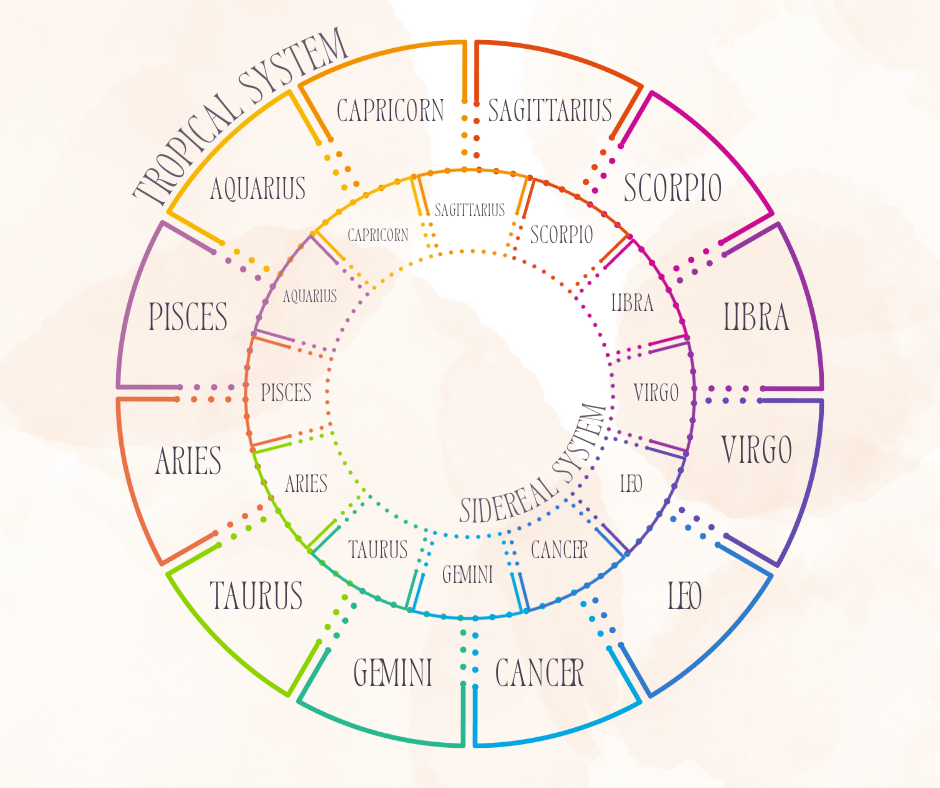
Sidereal astrology takes its name from the Latin word sidus, meaning “star.” True to its name, this system grounds itself in the actual positions of the stars in the sky.
This approach means it tracks the gradual drift of the stars caused by axial precession. Sidereal astrologers use a corrective system called the ayanamsa, which adjusts chart calculations to account for the shifting sky.
Over time, this shift has created a noticeable gap between the tropical and sidereal zodiacs—currently around 23 degrees.
That’s why, under sidereal astrology, your Sun sign might fall in an entirely different constellation. Someone considered an Aries in tropical astrology might actually be a Pisces in sidereal terms.
To do this, the sidereal zodiac uses key reference points in the sky, particularly the so-called “fixed stars.”
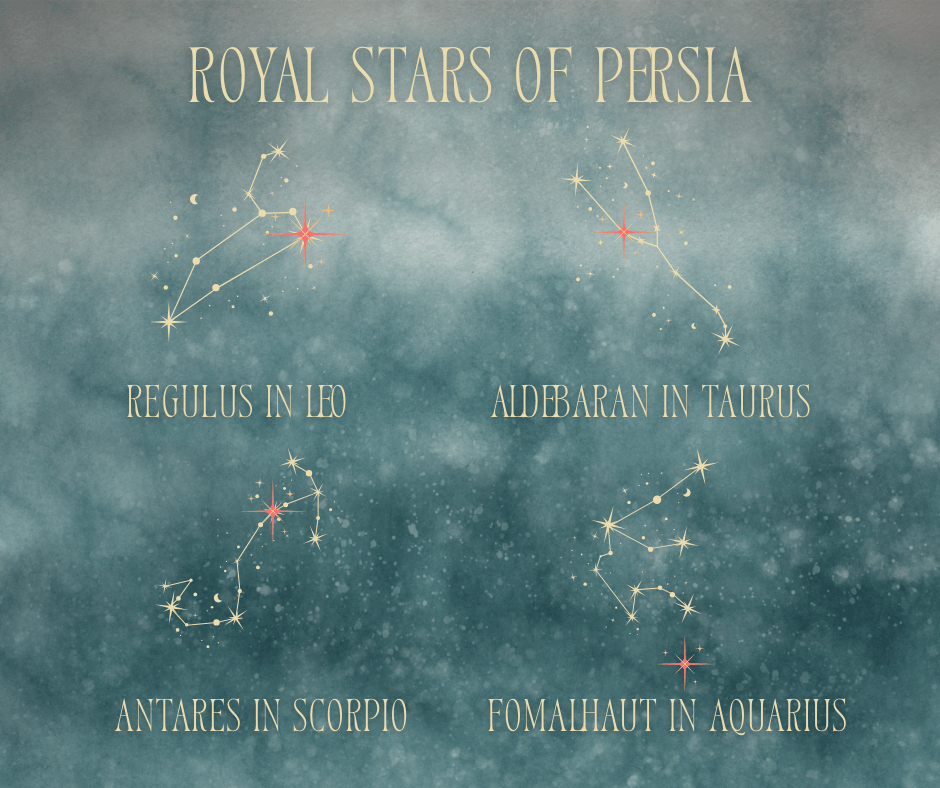
Among the most prominent are the Persian Royal Stars—Regulus in Leo, Aldebaran in Taurus, Antares in Scorpio, and Fomalhaut in Aquarius.
While astronomers note that even these stars have a minuscule movement (about one degree every 120,000 years), their shift is so slow that they’ve remained relatively stable for all of recorded human history. So for the purposes of astrology, they’re considered fixed.
Interestingly, this divergence between the tropical and sidereal systems will only continue to grow. In about 350 years, the difference will reach a full 30 degrees—essentially one entire sign.
Sidereal astrology is often considered more accurate for predictive techniques, which is why in many Hindu communities, astrology still plays a serious role in determining auspicious moments for major life events like marriages, business ventures, and spiritual practices.
Comparing Tropical and Sidereal Zodiac Dates
To give you a sense of how the two systems differ in real-world practice, here’s a quick comparison of zodiac Sun sign dates in tropical and sidereal astrology.
These ranges may vary slightly depending on the ayanamsa used, but the shift is typically about 23–24 degrees:
| Tropical Sign | Sidereal Sign |
| Aries (Mar 21 – Apr 19) | Pisces (Mar 15 – Apr 13) |
| Taurus (Apr 20 – May 20) | Aries (April 14 – May 14) |
| Gemini (May 21 – Jun 20) | Taurus (May 15 – Jun 15) |
| Cancer (Jun 21 – Jul 22) | Gemini (Jun 16 – Jul 16) |
| Leo (Jul 23 – Aug 22) | Cancer (Jul 17 – Aug 16) |
| Virgo (Aug 23 – Sep 22) | Leo (Aug 17 – Sep 16) |
| Libra (Sep 23 – Oct 22) | Virgo (Sep 17 – Oct 16) |
| Scorpio (Oct 23 – Nov 21) | Libra (Oct 17 – Nov 15) |
| Sagittarius (Nov 22 – Dec 21) | Scorpio (Nov 16 – Dec 15) |
| Capricorn (Dec 22 – Jan 19) | Sagittarius (Dec 16 – Jan 14) |
| Aquarius (Jan 20 – Feb 18) | Capricorn (Jan 15 – Feb 12) |
| Pisces (Feb 19 – Mar 20) | Aquarius (Feb 13 – Mar 14) |
Seeing the signs laid out like this, it’s no wonder so many people feel a sense of dissonance when comparing their tropical and sidereal charts!
What About Ophiuchus?

You may have heard of Ophiuchus, the so-called “13th zodiac sign.”
This constellation does, in fact, exist along the ecliptic, but it is not included in tropical astrology because the system is based on twelve equal 30-degree divisions.
Ophiuchus appears in some sidereal systems, but it’s not universally accepted, even among sidereal astrologers. However, true sidereal systems like those based on the IAU or Midpoint method include Ophiuchus and adjust zodiac boundaries to match the actual constellations in the sky.
These systems reflect the uneven sizes of the constellations, so signs like Virgo span more degrees than compact ones like Scorpio.
The Sun moves through Ophiuchus from roughly November 30 to December 18, making it the sign before Sagittarius for those who choose to acknowledge it.
Its inclusion in the zodiac was first suggested by astrologer Steven Schmidt in 1970 and proposed again in 1995. While the idea of a 13th zodiac sign didn’t gain traction in the West, it found some popularity in Japan.
Interestingly, the tropical zodiac shifts dates by about one day every 70 years. In contrast, the sidereal zodiac remains fixed, as it follows the actual positions of the stars.
This difference is why some astrologers argue that sidereal astrology is a more faithful reflection of celestial influences over time.
In 2016, a misunderstanding led many to believe that NASA had changed the zodiac and added Ophiuchus, but this was based on a misinterpretation of an educational article explaining how astronomy, constellations, and astrology have evolved over time. In reality, NASA had nothing to do with altering astrological systems.
Which System is Better?
There’s no definitive answer to this. Some people feel that sidereal astrology resonates with them on a deeper, more internal level, while tropical astrology better reflects their outward personality and life experiences.
Sidereal astrology is often seen as more precise for predictive purposes, while tropical astrology tends to be more psychological and symbolic.
One isn’t necessarily more “correct” than the other. Rather, it depends on how you engage with astrology and what you’re hoping to gain from it.
It’s important to remember that these systems were developed within different cultural contexts, each with its own rules and meanings. The mistake many people make is trying to apply tropical interpretations to a sidereal chart, or vice versa.
The two are not interchangeable. Just as you wouldn’t apply Western astrology’s meanings to Chinese astrology, you shouldn’t mix sidereal and tropical meanings without fully understanding their distinctions.
Discover What System Works for You
You don’t have to choose a “better” system. Tropical and sidereal astrology were built on different foundations, and each has its own logic, history, and way of looking at the sky. If one calls to you more, follow that.
What matters more than choosing the “right” one is understanding how each system sees the sky, time, and the self. If you’re still unsure, that’s okay too! Curiosity is as good a place to start as any.
If you enjoyed this article, I’ve got more astrology breakdowns, guides, and reflections you can explore here on Girl With The Stars!
✨ Enjoyed this post? Save it for later! ✨
Pin the image below to your favorite tarot or spirituality board on Pinterest! 📌🔮








Leave a comment