As far as cartomancy goes, I always thought tarot was the only thing that was worth learning. Considering that learning all seventy-eight cards of the major and minor arcana (plus the reversals!) by themselves can take years and years of study, why bother with the others?
Then I stumbled upon Oracle cards. To the uninitiated, it might even seem like the same thing, just in different…packaging.
Actually picking them up certainly proved me wrong. If you’re standing where I was—curious, a little overwhelmed, and wondering which deck is right for you—you’re in the right place.
Let’s talk through the real differences between Tarot and Oracle cards, what they’re good for, and how to know where to begin.
In This Article
- How Tarot and Oracle Cards Are Different
- Should you start with Tarot or Oracle Cards?
- What Oracle Cards Actually Tell You
- Why Some Readers Don’t Like Oracle Cards
- One Deck at a Time
How Tarot and Oracle Cards Are Different
You’ve probably seen readers use both decks in similar ways: pulling cards, interpreting messages, doing readings. But under the surface, they work really differently.
Tarot is Prose
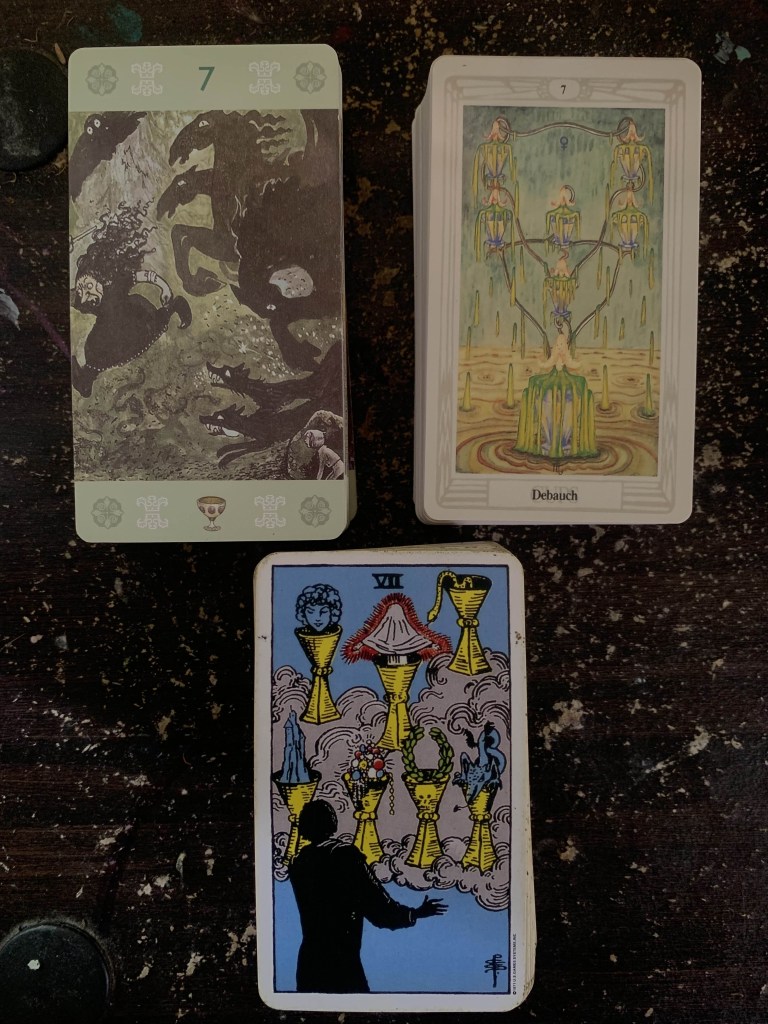
Every Tarot deck follows the same basic system: 78 cards, divided into the Major Arcana (big life themes) and Minor Arcana (everyday stuff).
There’s a shared structure behind it, even if the art styles can vary across different decks.
If you learn Tarot, you’re learning an ancient system that also incorporates astrology, numerology, elemental correspondences—and you can keep deepening your skills forever. That’s the beauty of it. But it also means it takes time.
When I got my first Tarot deck, I basically stared at it like a deer in headlights. I thought, how do people just KNOW what these mean?
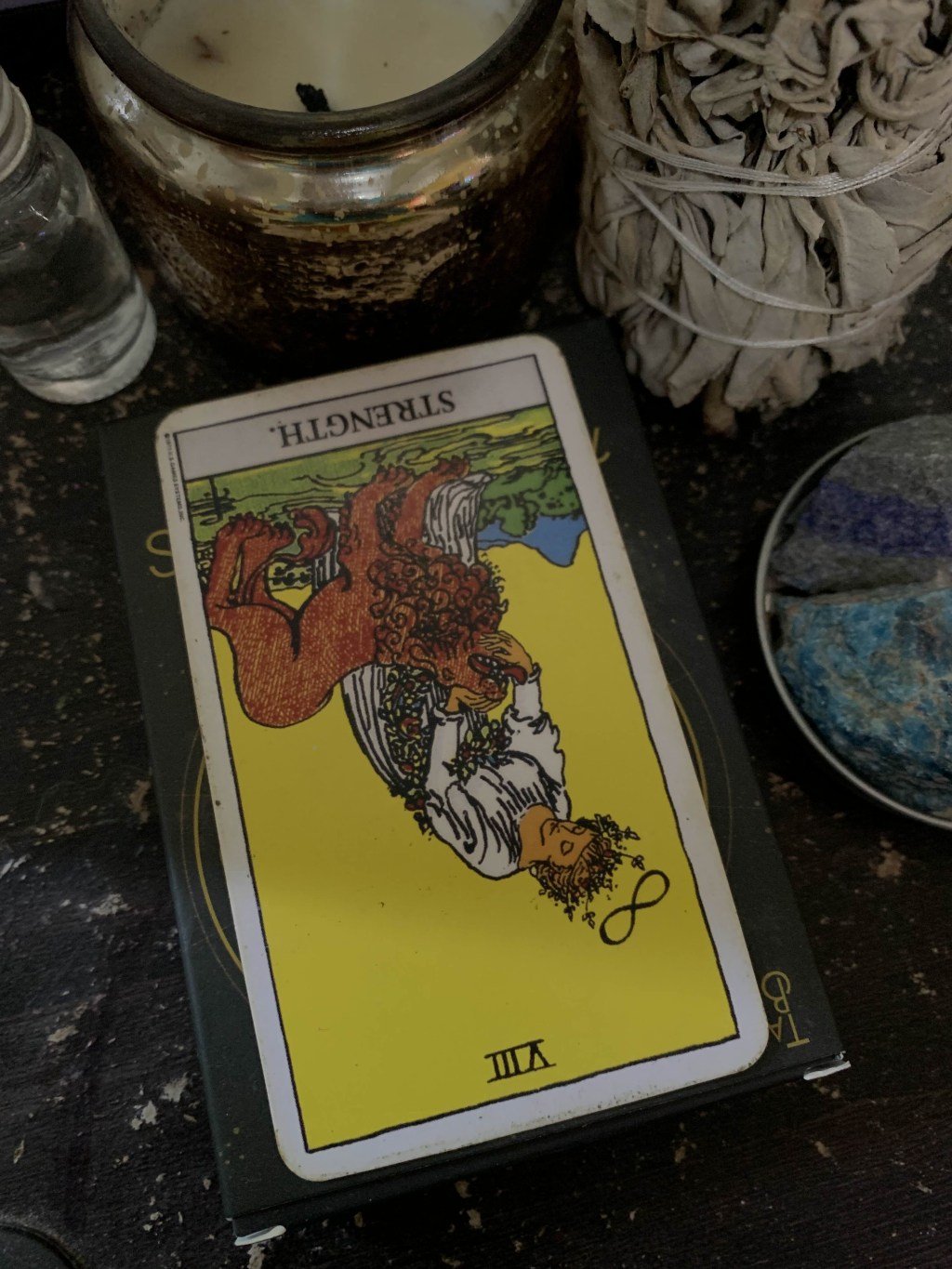
Fast forward a couple years later, I now have 3 different Tarot decks: the Rider-Waite-Smith deck, the Thoth deck based on Egyptian tarot, and a John Bauer deck that represents each card using paintings by the eponymous Swedish artist.

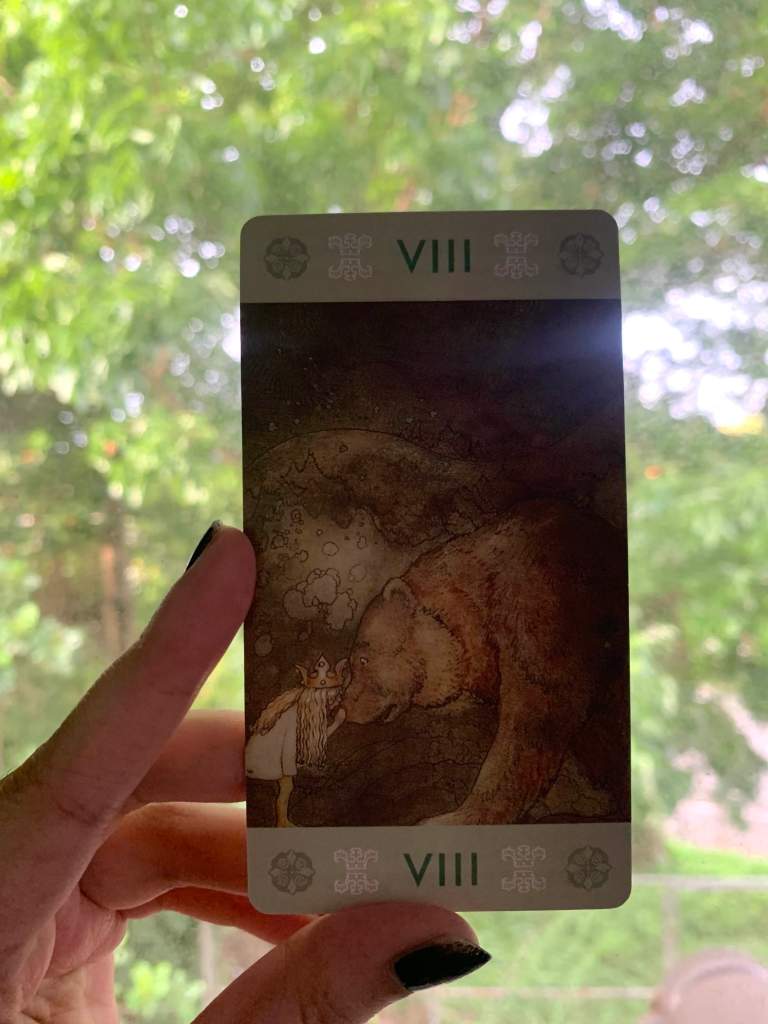
The latter deck definitely stole my heart, as it just so happens that one of Bauer’s pieces was also featured in my favorite psychological horror 2019 film, Midsommar.
In the Bauer deck, this lovely painting named “Stackars lilla bamse,” Swedish for “Poor Little Bear,” takes the place of the Strength tarot card in the Major Arcana.
But I digress. Aesthetics aside, I definitely use tarot more consistently, for readings and for moments of introspection. Much like prose, I rely on its structured nature to give order to any scattered thoughts or feelings I may harbor in the moment, and I recognize that others do too.
But of course, not everyone likes prose. Some people like something more abstract, bite-sized, and personal.
Oracle Cards are Poetry

If tarot has the structure of prose, Oracle cards have the flexibility and leeway of poetry. Ergo, there are no rules!
Oracle decks don’t follow a universal system. Each deck is its own little world, built by the creator’s vision. Some have 40 cards, some have 80. Some focus on angels, some on earthly or abstract themes.
The meanings tend to seem straightforward, and they’re usually written directly on the card or in a small guidebook. You don’t have to memorize anything complicated to start pulling cards right away. It’s a softer, looser process.
However, just because everything seems to be spelled out for you on the cards, doesn’t mean interpreting them will be easier – when you don’t know where to begin.
Should you start with Tarot or Oracle Cards?
If you’re brand new and feeling a little intimidated, Oracle cards might feel more welcoming at first.
They’re like “Tarot lite” ; simple enough, very flexible, and you don’t need to memorize anything to start pulling cards and getting messages. It feels easy and open, which is exactly what some people need in the beginning.
But in my experience, learning Tarot actually gives you an edge in the long run. Because I learned with tarot first, I already knew how to intuit the messages more easily, as it gave me a bit of structure to work with.
It taught me how to break down the elements of each card: the colors, the symbols, the posture of the figures, and ultimately piece together a story from it.
When you’re working with Oracle cards, imagery is all you have. And if you’re diving in headfirst without any kind of framework or prior experience, it can get overwhelming really fast. You might end up feeling more lost, not less.
That’s why even though Tarot seems like the more “intimidating” option, it’s actually the key to interpreting Oracle cards more effectively.
You’ll have a better idea of what to look out for; which details matter, how symbols weave into a bigger message, how to understand the nuances in what the cards are trying to say.
Let’s step away from the prose vs poetry metaphor, and put it into more grounded terms. Think of it like learning to drive. You’ll have a much easier time driving an automatic car if you already know how to drive a manual. Sorry for the random non-tarot-related comparison, but that’s the best way I can explain it! (And I don’t even drive)
At the end of the day, it really depends on what you’re looking for right now. Most people end up using both, anyway! There’s no wrong answer here. It’s just about what feels like it’s meeting you where you are right now.
What Oracle Cards Actually Tell You

When I first started pulling Oracle cards, I was surprised by how…emotional it all was. I wasn’t getting hints of “next steps” or “warnings.” I was getting things like, “Trust,” “Healing,” and “New Beginnings.”
It felt less like fortune-telling and more like therapy. Though, just as I discourage the use of tarot to substitute professional help, I reiterate this warning with the even more…amorphous messages that Oracle cards bring.
Be that as it may, Oracle cards are beloved for a lot of reasons, especially by people who feel overwhelmed by the complexity of traditional Tarot. Let’s go through some of them now:
Emotional Support When You Need It
Not every day calls for an epic 10-card spread dissecting your soul’s mission. Sometimes, you just want a card to remind you that you’re human; it’s okay to feel tired, to take a break, to not have all the answers.
Oracle cards can be that soft landing. They don’t ask much from you. One pull, one message, and suddenly it feels like someone’s checking in on you. It’s like a spiritual pat on the back that says, Hey. You’re doing your best.
Quick Insights When You’re Busy
Life gets hectic. And if you don’t have the time (or energy) to sit down and decode a full Tarot spread, oracle cards are perfect for quick moments of clarity. Like fortune cookies.
You can literally pull a card in under a minute while drinking your morning coffee or during a lunch break. There’s no need for prep, candles, or a ceremonial cloth. Just a simple shuffle and a message to carry you through the rest of your day.
Complementing Tarot Readings
A lot of readers, including me, use both Tarot and Oracle side by side. After doing a detailed Tarot reading, especially if it was intense or left me with a lot to think about, I’ll pull an Oracle card to “close” the session.
It helps soften or tie together the themes that came up, almost like a gentle voice saying, Okay, now here’s what to keep in mind as you go forward.
Specific Purposes

Because there’s no fixed system, Oracle cards are incredibly flexible. Aside from tarot, you can pair them with affirmations, journal prompts, dreamwork, spells, or rituals—whatever feels aligned in the moment.
But sometimes, certain Oracle decks can actually designed with very specific purposes in mind. You might have heard of angel cards, or maybe you’ve seen them pop up while scrolling through your TikTok or Instagram feed.
These kinds of oracle decks are often used to connect with divine or spiritual guidance. People use them to ask, “Who’s guiding me right now?” or “What message do my angels have for me today?” If you’re drawn to that kind of energy, they can be a comforting, affirming tool to have on hand.
I also use angel number cards, especially when I’ve been noticing repeating numbers or weird little coincidences. Sometimes I’ll pull a number at random and sit with the message. Other times, I’ll actually seek out a specific number I’ve been seeing and read it like a reference book.
Then there’s my astrology-themed Oracle deck, which I honestly treat more like flash cards. I use it when I’m studying birth charts or trying to decipher a planetary transit.
Most of the time, I’ll pair it with Tarot, as it adds a layer of insight, especially when I want to bring in some astrology-based context to a reading. It’s really insightful for astrology-focused divination.
Why Some Readers Don’t Like Oracle Cards
As with all things, not everyone vibes with Oracle decks. And that’s okay too. Here’s why some readers prefer to stick with Tarot:
No Universal Structure
Tarot has a system that stretches across centuries and cultures. Oracle decks are more personal and unique to the creator. If you like working within a shared symbolic language, Oracle can feel too scattered.
Over-reliance on Guidebooks
through it every time, waiting for the “correct” meaning instead of building an intuitive connection. And honestly, that’s valid. Some decks are created with very specific messages in mind, so it can feel like you’re just reading a blurb instead of actually reading the cards.
But in my case, it’s been kind of the opposite. Most of the Oracle decks I own didn’t come with guidebooks at all. It’s just been me and my intuition from the start. The Green Witch Oracle technically has an accompanying book, but I haven’t been able to get my hands on a copy yet.
So every time I use it, I’m just doing my best decoding the meanings based on what’s printed on the card, the plants, the keywords, the art.
It’s been a challenge, but honestly, it’s also helped me grow. It pushes me to slow down and feel into each card, instead of memorizing someone else’s definition.
Simpler Meanings
If you love deep, layered symbolism, all that stuff you can unpack for hours—Oracle might sometimes feel a little too simple. It’s usually more about “one message” than weaving a whole narrative the way Tarot lets you.
Personal Taste
Some people brush off Oracle cards as too new age, too vague, or not rooted in a deeper system like Tarot is. And yeah, some decks can feel a little random.
In my opinion, though, I realize that it has a lot to do with finding the right deck. Just like with Tarot, not every Oracle deck will resonate.
For me, that shift happened when I got the Herbal Astrology Oracle Deck. It ties astrology and herbology together, representing planets and placements through plants.
I was having a hard time really grasping what each planet embodied until this deck helped connect the dots. It’s become a beautiful learning tool, not just a divination one.
So if Oracle doesn’t speak to you at first, don’t write it off completely. It might just be the deck.
One Deck at a Time
If you’re sitting there torn between Tarot and Oracle cards, let me make it simple: you can’t mess this up.
I may have started with Tarot, as even when I didn’t fully trust my intuition yet, it gave me something to build from. With Oracle cards, I was given a more open-ended method to check in with myself. Now I use both, depending on the day. It might be different for you.
Start with what feels less overwhelming, but also don’t be afraid of the one that looks a little more complex. Both are valid, both are powerful, and both will teach you something different. Wherever you begin, trust that it’s the right place for you, right now.
If you’re curious to keep learning, I’ve got more posts all around the blog to help you get started! Whether it’s Tarot meanings, how to connect with your birth chart, or little rituals to stay grounded. Explore what calls to you!
✨ Enjoyed this post? Save it for later! ✨
Pin the image below to your favorite tarot or spirituality board on Pinterest! 📌🔮


Leave a comment