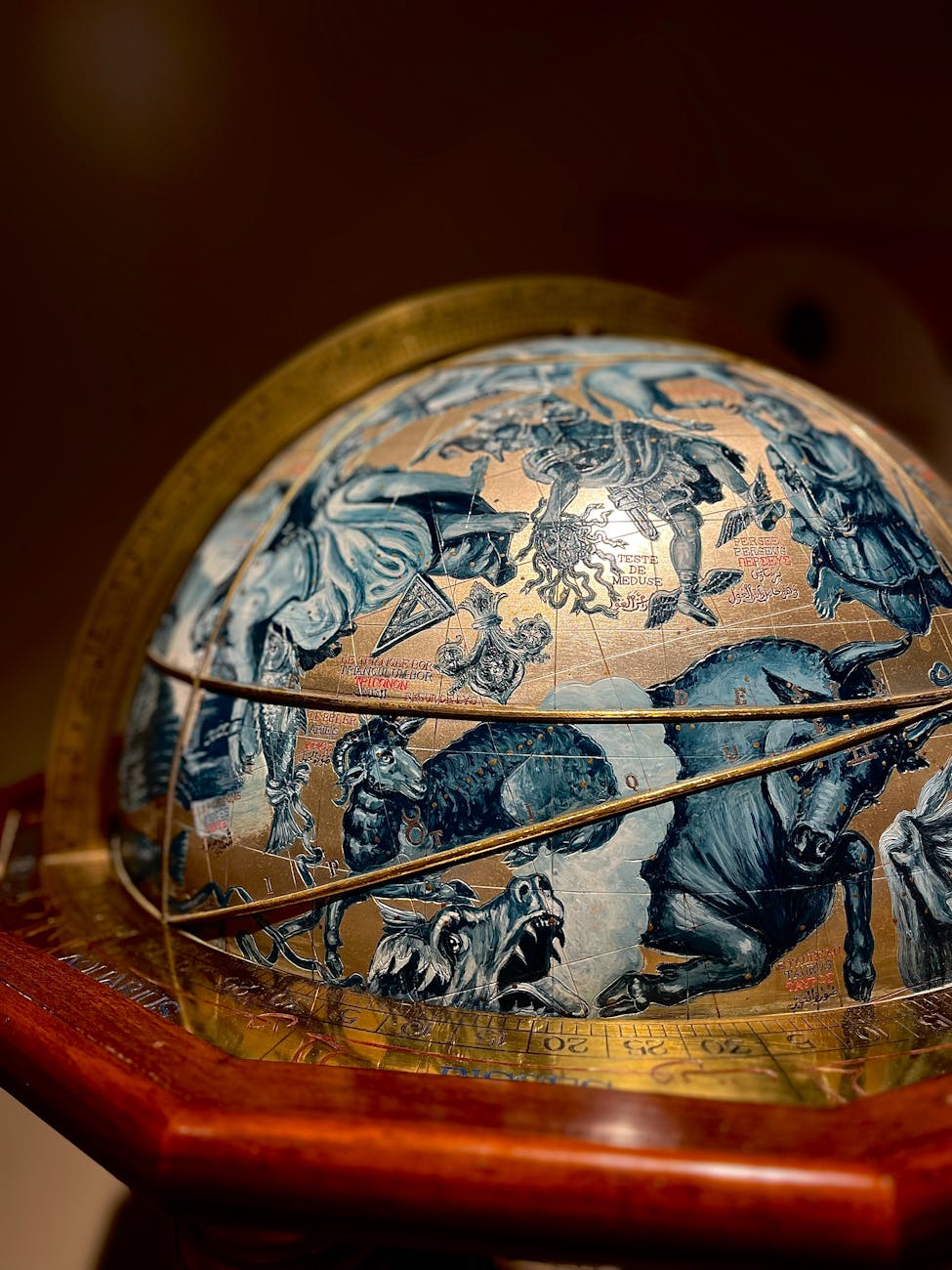
When I first started learning astrology, I didn’t think twice about the idea that Uranus ruled Aquarius, Neptune ruled Pisces, and Pluto ruled Scorpio. It was in all the books. All the apps. The logic seemed sound, these newly discovered planets had themes that felt aligned with the signs they were assigned.
But then I started learning about traditional astrology. And suddenly, everything made more sense.
Why? Because traditional astrology was built on a much more nuanced system than I first thought. And when I saw how clean and intentional that structure was, especially with planetary rulerships, it honestly blew my mind.
Today, we’ll be breaking down everything I’ve learned about how traditional and modern rulerships work, what changed, and why, like me, you might want to rethink what you’ve been told about who rules what.
In This Article
- What are Planetary Rulerships?
- Traditional Planetary Rulerships (The Original 7)
- Modern Planetary Rulerships (Post-Discovery)
- Traditional vs Modern Sign Descriptions
- So Should I Use Traditional or Modern Rulers?
- Understand Your Chart on a Deeper Level
What are Planetary Rulerships?
In astrology, a planetary ruler is the planet that has the strongest natural connection to a particular sign. That planet governs or expresses itself most comfortably through that sign’s energy.
When a planet is in the sign it rules, it’s said to be in its domicile.
The word domicile comes from Latin (domicilium), meaning home or dwelling place. In astrology, it describes the sign where a planet feels most “at home,” when it functions with ease and is aligned with its nature.
Rulerships also tie into concepts like dignity (how well a planet functions in a sign), house strength, and advanced timing techniques used in both traditional and modern astrology.
Traditional Planetary Rulerships (The Original 7)

We didn’t always know all of the planets, nor did we know their names. Before we even learned of the existence of Uranus and beyond, traditional astrology used only the visible planets—Sun, Moon, Mercury, Venus, Mars, Jupiter, and Saturn.
Each planet (except the luminaries) ruled two signs: one masculine/diurnal and one feminine/nocturnal. The system looked like this:
- ☉ Sun → Leo
- ☽ Moon → Cancer
- ☿ Mercury → Gemini (diurnal) & Virgo (nocturnal)
- ♀ Venus → Libra (diurnal) & Taurus (nocturnal)
- ♂ Mars → Aries (diurnal) & Scorpio (nocturnal)
- ♃ Jupiter → Sagittarius (diurnal) & Pisces (nocturnal)
- ♄ Saturn → Capricorn (diurnal) & Aquarius (nocturnal)
It’s symmetrical, balanced, and based on the Chaldean order—the speed of each planet from Earth’s perspective.
| Did You Know? Astrology worked fine for 2,000 years without Uranus, Neptune, or Pluto! Those planets weren’t even discovered until 1781 (Uranus), 1846 (Neptune), and 1930 (Pluto). And yet, ancient astrologers predicted marriages, wars, illnesses, and destinies with stunning accuracy. |
Modern Planetary Rulerships (Post-Discovery)
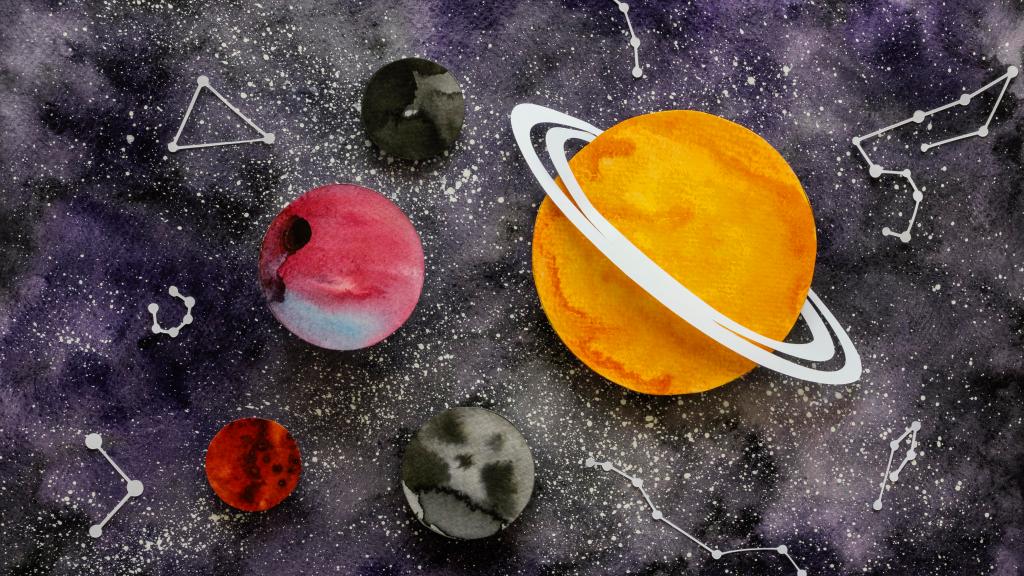
Once Uranus, Neptune, and Pluto were discovered, modern astrologers started assigning them to signs based on thematic similarity:
- ♅ Uranus → Aquarius
- ♆ Neptune → Pisces
- ♇ Pluto → Scorpio
This shifted the rulerships for only three signs, but it disrupted the symmetrical system. Now, some planets had only one sign, while others had two.
The new associations were more psychological than technical, and while they resonated emotionally, the system itself became “less structurally sound,” so to speak.
Traditional vs Modern Sign Descriptions
One of the clearest ways to feel the difference between traditional and modern astrology is in how the signs themselves are described, which depends heavily on who you think rules them.
In traditional astrology, rulership was symmetrical. Every planet—except for the Sun and Moon—ruled two signs: one diurnal (outward/active) and one nocturnal (inward/receptive).
This gave planets like Mars, Venus, Jupiter, etc., a balanced duality of expression. Mars could show up bright, assertive, and bold in Aries, but dark, emotionally driven, and strategic in Scorpio.
Venus could be sensual and steady in Taurus, and refined and diplomatic in Libra. This structure gave meaning to how planets express themselves differently depending on context, without leaving any signs “unclaimed.”
When modern astrology began to assign new planets (Uranus, Neptune, Pluto) to signs after their discoveries in the 18th–20th centuries, the original rulership structure was altered.
While this allowed astrologers to match signs with newer, more psychological planetary meanings, it also created some inconsistencies. In “losing” this symmetry, some would go as far as to say that modern astrology had lost some of its logic as well! But is that really true?
One wonders how much of that statement is exaggeration, born from a resistance to change?
Take Scorpio. Traditionally ruled by Mars, Scorpio was seen as…
- strategic, intense, and emotionally defensive
- protective with deep instincts for survival and power
- a sign that takes action quietly but decisively
When Pluto became its modern ruler, Scorpio gained themes of…
- transformation, trauma, and emotional regeneration
- psychological depth and spiritual alchemy
- power struggles and obsession
- rebirth through destruction
Both perspectives describe Scorpio well, but they emphasize different aspects of the archetype.
While only three signs have different traditional and modern rulers, the tone and symbolism of every sign can shift depending on which system you use, and what qualities you choose to emphasize.
To see how planetary rulership shapes each sign’s meaning, here’s a full comparison of the zodiac through both traditional and modern lenses:
| Sign | Traditional Ruler | Modern Ruler |
|---|---|---|
| Aries | Mars – Bold, active, assertive, courageous, initiates action and protects self. | Same (Mars) – Still seen as driven and fiery, but more emphasis on impulsiveness, anger, and self-expression. |
| Taurus | Venus – Steady, sensual, values beauty and material comfort, grounded in loyalty and pleasure. | Same (Venus) – Often interpreted with a stronger focus on self-worth, stability, and emotional security. |
| Gemini | Mercury – Quick-witted, curious, skilled in communication, adaptable and social. | Same (Mercury) – Viewed more psychologically as information-gathering, mentally scattered, or in constant dual awareness. |
| Cancer | Moon – Emotionally nurturing, intuitive, protective of home and loved ones, guided by inner tides. | Same (Moon) – Often described more symbolically as empathic, sentimental, and emotionally reactive. |
| Leo | Sun – Radiant, confident, performs with flair, driven to lead and self-actualize. | Same (Sun) – Modern takes may emphasize ego, creative identity, or the need for personal recognition. |
| Virgo | Mercury – Analytical, detail-oriented, service-driven, devoted to refinement and improvement. | Same (Mercury) – Interpreted more through mental health, self-critique, or body-mind integration in modern frameworks. |
| Libra | Venus – Diplomatic, charming, harmony-seeking, socially aware and partnership-focused. | Same (Venus) – More psychological emphasis on indecision, identity in relationships, and idealism. |
| Scorpio | Mars – Strategist, emotionally intense, protective, focused on willpower and control. | Pluto – Deep transformation, obsession, emotional death and rebirth, psychological underworld themes. |
| Sagittarius | Jupiter – Expansive, optimistic, truth-seeking, philosophical, adventurous and forward-looking. | Same (Jupiter) – Greater focus in modern views on belief systems, idealism, and meaning-making across cultures or identities. |
| Capricorn | Saturn – Disciplined, responsible, pragmatic, seeks mastery and long-term success. | Same (Saturn) – Modern interpretations may highlight shadow traits like emotional restriction, guilt, or overwork. |
| Aquarius | Saturn – Visionary but structured, idealistic with rules, socially conscious, loyal to systemic change. | Uranus – Rebellious, innovative, quirky, defies tradition, favors freedom over form. |
| Pisces | Jupiter – Spiritually wise, empathetic, big-hearted, philosophical, loves connection to meaning and collective healing. | Neptune – Dreamy, mystical, escapist, artistically sensitive, blurs boundaries between self and spirit. |
What’s interesting is how the meanings of these signs may have shifted over time to better suit their new rulers. Scorpio wasn’t always about “death and rebirth” until Pluto came along.
Pisces may not have always been described as escapist or confused until Neptune’s symbolism was projected onto it. It raises the question—did the signs change to match the new planets, or were they always that way?
This is why some astrologers prefer the traditional model. The signs were originally built around the classical planets. Modern astrology, while rich in psychological insight, sometimes feels like it’s retrofitting meanings onto older archetypes.
That said, you don’t have to pick sides. Some astrologers use both systems, treating the outer planets as secondary or “co-rulers.” Others view them as generational influences rather than sign rulers.
So Should I Use Traditional or Modern Rulers?
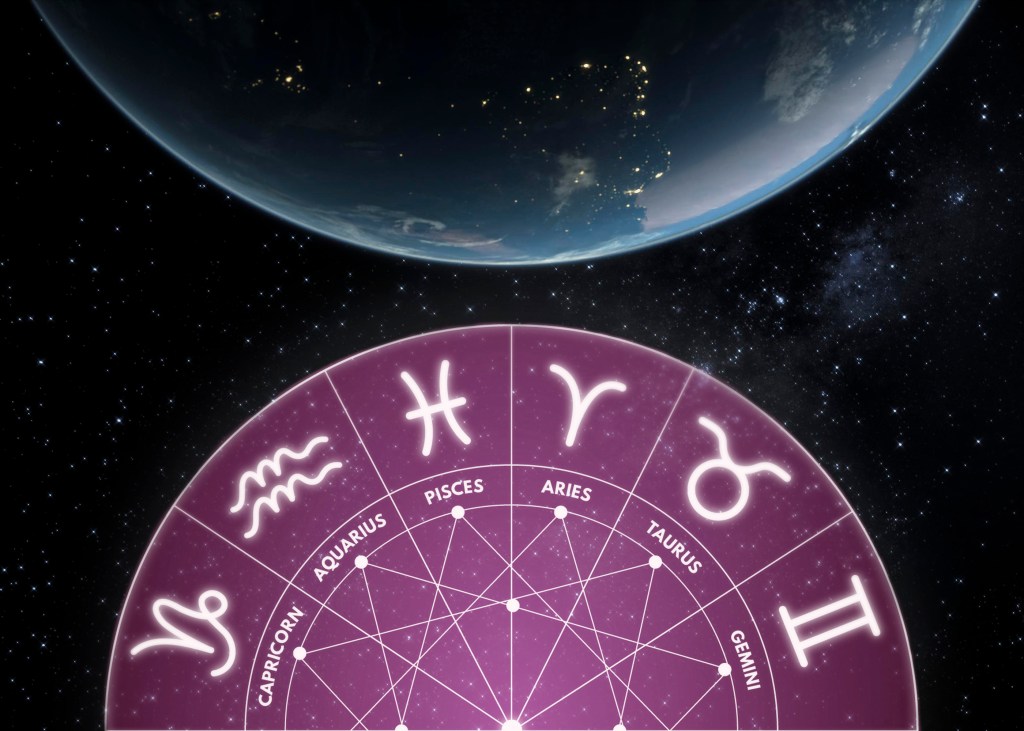
Here’s the honest answer: you can use both, but it depends on what kind of astrology you’re doing.
- For natal chart interpretation, I stick with traditional rulers as primary. They help explain chart structure, house rulerships, and planetary dignity much more cleanly.
- For transits, generational themes, or deep psychological shifts, I consider Uranus, Neptune, and Pluto. They’re potent, but they move slowly and influence large-scale patterns, not personal daily life.
- If you’re into evolutionary or karmic astrology, the outer planets often play a bigger role—especially Pluto and the lunar nodes.
There’s no need to commit to one dogma. But there is a lot to gain from understanding the traditional system before layering in the modern planets.
| Did You Know? Ancient astrologers used a symbolic “birth chart of the world” to explain why each planet rules the signs it does. It’s called the Thema Mundi, and its logic is based on planetary speed and visibility. Every sign’s ruler makes perfect sense when you look at it through that lens. |
Understand Your Chart on a Deeper Level
If astrology ever felt confusing or inconsistent, you’re not alone, and it might not be your fault! Modern rulerships can feel disjointed because they were added onto a structure that was already “complete.”
Whether you’re new to astrology or already deep in study, revisiting planetary rulerships can give you a more grounded, intuitive understanding of the signs, houses, and your chart as a whole.
Curious to explore more? Browse the blog for more resources on planets in astrology, birth chart interpretation, and how rulerships can reshape the way you see your cosmic blueprint.
✨ Enjoyed this post? Save it for later! ✨
Pin the image below to your favorite tarot or spirituality board on Pinterest! 📌🔮


Leave a comment