Last time, I shared some quick tips for learning the Major Arcana. Though if I could wager a guess, the Minor Arcana is actually where most tarot readers hit a wall.
It’s not surprising. There are 56 Minor Arcana cards compared to just 22 Major Arcana cards, and the meanings of the Minor cards aren’t always as clear from the imagery alone.
I really struggled with the Minor Arcana when I started reading Tarot back in 2022. But after three years of trial and error, I’ve found five quick tricks that helped me not only remember the cards, but actually understand them.
Now, when I read for someone, I’m not just parroting keywords or textbook meanings, I’m interpreting the cards in a way that fits the person and the question they’re asking.
If the Minor Arcana has been giving you a hard time, try these tips! They’ve worked for me thus far, and they might just make everything click for you too.
In This Article
- Tip #1: Master the Four Elements
- Tip #2: Learn Numerology
- Tip #3: Get to Know the Court Cards
- Tip #4: Pay Attention to Imagery
- Tip #5: Give the Cards Names
- Read With Confidence
Tip #1: Master the Four Elements
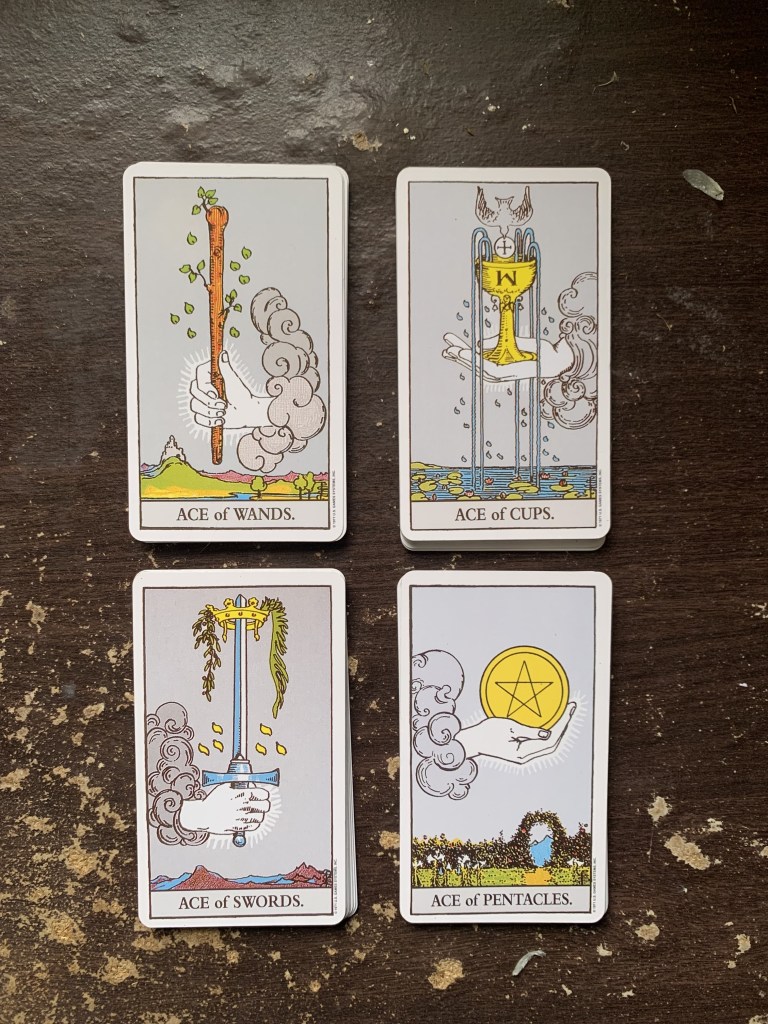
My first breakthrough came when I realized that each Minor Arcana suit corresponds to an element, and that element shapes the card’s core meaning:
- Wands → Fire – Power, creativity, and inspiration. Wands are the spark of something new, much like a magic wand bringing ideas to life.
- Cups → Water – Emotions, intuition, and relationships. Cups are what you “fill” with your emotional experiences.
- Swords → Air – Thoughts, communication, and mental clarity. Just like air, thoughts are invisible but powerful.
- Pentacles → Earth – Material concerns, hard work, and stability. What you plant today will take time to grow and harvest.
A quick way to remember the suits is by linking them to regular playing cards:
- Cups = Hearts → Emotions
- Pentacles = Diamonds → Wealth and material gain
- Wands = Clubs → Power and action
- Swords = Spades → Sharp thoughts and decisions
Once you get the elemental associations down, you’ll start seeing patterns in how the suits interact, magnify, or even clash in a spread.
For instance, pulling multiple Pentacle cards in a love reading could suggest the need for concentrated work in a relationship, or over-reliance on material possessions.
Pulling Swords and Cups could be read as potential clashes between the mind and the heart. Meanwhile, pulling Wands and Pentacles could mean that there is a need to lay the groundwork first in order to pursue a new venture.
Of course, these are all dependent on the kind of cards you actually pull.
Tip #2: Learn Numerology
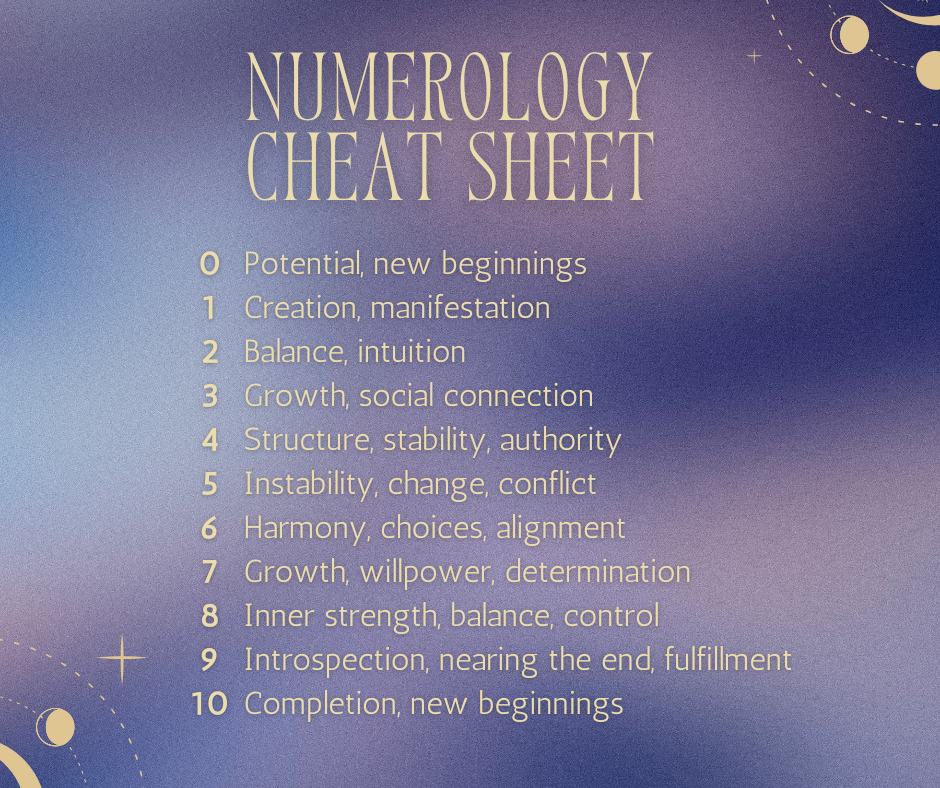
After you get comfortable with the suits, the next step is to figure out how the story unfolds within each one.
Just like the Major Arcana follows the Fool’s Journey, each suit in the Minor Arcana tells its own story, progressing from Ace (1) to 10.
Laying out the suits in order from Ace to Ten and studying how they evolve will help you see the bigger picture. Again, less about memorizing and more about watching a story unfold.
Thankfully, things are a bit simpler here since each suit follows a neat progression. Well, almost.
What About the Court Cards?
Did you know that Court Cards actually have numbers assigned to them too? If you can recall from last time, for numbers exceeding ten, we can actually “reduce” the number to its individual digits to get the meaning behind the card.
The same concept applies here:
- Page (11 → 1 + 1 = 2) – New beginnings, curiosity, and learning. Receiving a message that can can lead you to make choices – some more difficult than others.
- Knight (12 → 1 + 2 = 3) – Action, ambition, movement, and challenges. Rushing into things, passionately, unfettered, sometimes recklessly.
- Queen (13 → 1 + 3 = 4) – Intuition. A nurturing, balancing energy that stabilizes brash action.
- King (14 → 1 + 4 = 5) – Leadership and influence. Asserting your will can sometimes cause conflict, but can bring about the change that is needed.
You might also notice that in my Minor Arcana resources, I sometimes reference Qabalistic numerology, which links the numerology of court cards to spiritual concepts from the Tree of Life. But that’s a topic for another day, maybe a future post!
Instead of seeing them as random personality archetypes, you can connect them to the overarching numerological patterns of the tarot, making your readings more intuitive and structured.
Don’t worry – I’ll go into the Court Cards themselves later in this post so you can get a better feel for how they work in readings.
Odd and Even Numbers
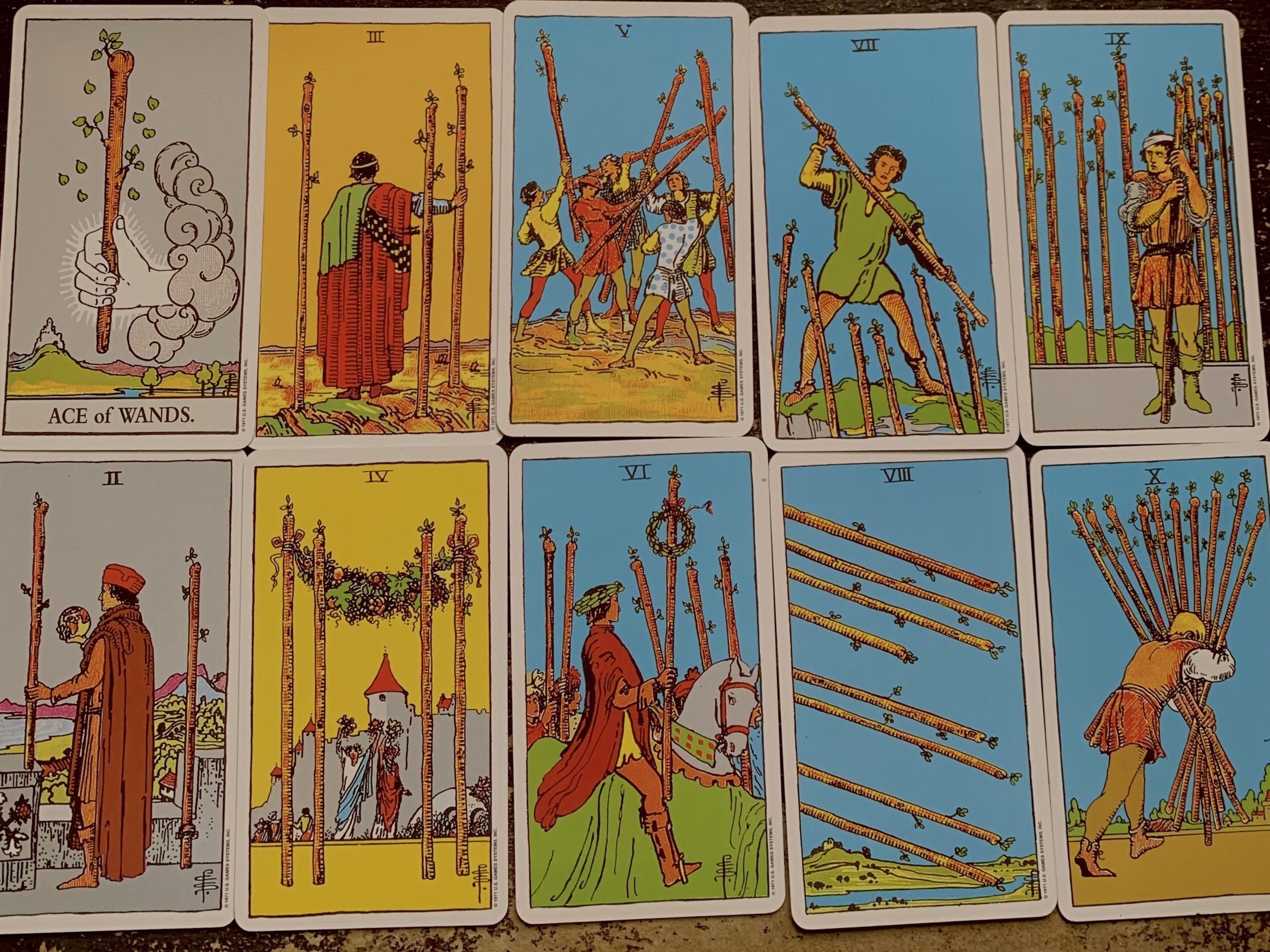
To make it easier to remember the individual numerologies of the Minor Arcana, you can group the numbers into odd and even. Sometimes, they’re even called introvert (odd) and extrovert (even) numbers because of their general qualities.
- Even numbers → Stable and balanced. They represent moments of steadiness, success, or abundance in a journey.
- Odd numbers → Unstable and challenging. They indicate shifts, growth, or disruption.
For example, the Two of Pentacles embodies the act of “balancing” responsibilities. The Five of Cups, on the other hand, represents disappointment – an imbalance between what you have and what you want.
Let’s use the above Wands suit as an example. The first row shows the Ace, Two, Three, Five, and Seven of Wands.
A quick glance over this group of cards covers themes of change, indecision, and challenge. Ace is literally the catalyst for change and the beginning of new passions.
Three’s indecision is caused by their desires being divided unevenly, inciting the need to act to change something. Five and Seven show conflict among a group, and conflict within oneself. Nine embodies the struggle to stay strong in the face of adversity.
The second row shows our cards with extrovert numbers: Two, Four, Six, Eight, and Ten of Swords.
Right away, you can see that these cards have more “stable” imagery. The indecision in Two is more balanced between two choices rather than three.
Four and Six show success and abundance. Eight is often read as a signifier of change, but also as a need to maintain your momentum in pursuit of what you want.
Ten is a figure at their maximum capacity – or in other words, in equilibrium between themselves and the weight of what they carry.
You can try to find a similar pattern in the other suits. There will be some deviations at first, but this can all depend on how you interpret each card.
This way, even if you don’t remember the exact numerologies of each card, you’ll still be able to sense if the energy is “stable” or “changeable.”
Tip #3: Get to Know the Court Cards
Court cards (Pages, Knights, Queens, and Kings) are where things can get a bit trickier! But once you know how they work, they add so much depth to a reading.
Unlike the numbered cards (Ace to 10), court cards represent people, roles, or specific traits:
- Pages are wide-eyed scholars and full of questions, ready to explore the world and soak up knowledge like a sponge. They are students, workers, messengers. Young but inexperienced people.
- Knights charge forward with passion, always on a quest, restless if not always moving toward something. They are teenagers who thrive on the recklessness of youth.
- Queens rule people’s hearts; not domineering, but guiding and shaping the world around them without them realizing it. They are the emotional and mental clarity you attain in adulthood.
- Kings build everything from the ground up. After years of mastering their craft, they are the ones who call the shots. They are the wisdom and material stability you attain in old age.
Court cards can represent you, the querent, or someone involved in the situation.
For example, the Queen of Cups might reflect your own intuitive abilities, or it could signal that you need to embody that nurturing energy in a situation.
Sometimes, it could simply mean an older figure (may or may not be a woman) that you know and trust enough to advise you on certain problems you might be facing!
They can also serve as a prompt for action. If a court card shows up, it might mean you need to embody that energy or seek out someone who personifies it.
The Elements in Court Cards
On top of that, each rank of the court cards also has a traditional elemental association.
- Pages – Air
- Knights – Fire
- Queens – Water
- Kings – Earth
Now, here’s where things get interesting. We already know that each suit has its own element, so every court card is actually a combination of two energies. For example:
- The Queen of Swords is a mix of Water (Queens) + Air (Swords). She is emotionally perceptive but still sharp and logical.
- The Knight of Pentacles combines Fire (Knights) + Earth (Pentacles). He moves with purpose, but he’s slow and methodical rather than impulsive.
This is where you can start noticing how these energies interact in a reading. Are they complementing each other? Or is there friction, like when fiery Knights clash with slow and steady Earth?
For example, if a Knight of Wands (Fire + Fire) shows up, you know you’re dealing with pure momentum—unstoppable, but maybe a little reckless.
On the other hand, a King of Cups (Earth + Water) suggests someone who is in tune with their emotions, but still very grounded in reality.
These subtle dynamics can completely change the way a court card “acts” in a spread. Instead of just memorizing keywords, think about how these elements shape their personalities and behaviors.
Tip #4: Pay Attention to Imagery
Imagery is everything in tarot. The symbols, colors, and details on each card often hold the key to understanding the deeper meaning, and it’s no different with the Minor Arcana.
When you’ve taken into account the numerological and elemental associations, the rest of the puzzle comes together much more easily.
For example:
- The Three of Cups shows three women celebrating, showing friendship and successful connections. This is a particularly joyful card associated with happy feelings.
- The Five of Pentacles shows two figures walking in the snow, symbolizing hardship and feeling left out. This can be an unsettling card to receive, often highly associated with the scarcity of material resources.
But sometimes, the imagery just won’t resonate – and that’s okay! If a certain deck feels confusing or off, you might not be using the right deck for you.
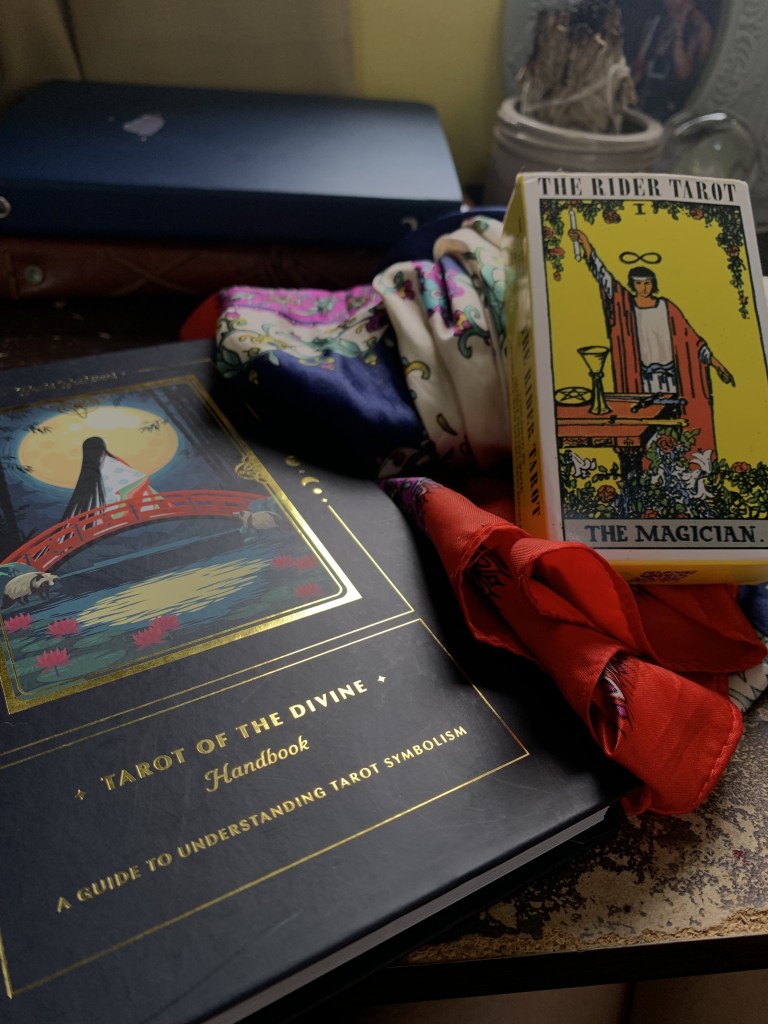
When I first started, I was gifted the Rider-Waite Smith deck – which is the most widely used deck out there. That made it easier to study since there were so many resources available to help me understand the imagery and meanings.
But I also try to experiment, reading other versions of the deck, featuring more unique interpretations.
I also like the Yoshi Yoshitani Tarot Handbook as it reframes each card as mythological figures around the world, whose stories helped me understand the message of each card on a more personal level.
But tarot is personal, and what works for one person might not work for another. You might feel more drawn to a detailed, richly illustrated deck, or maybe a minimalist deck feels more intuitive to you. Find a deck that speaks a language you understand.
Tip #5: Give the Cards Names
Lastly, the one trick that helped me tremendously was assigning each card a “nickname” or “power phrase,” similar to how I approached the Major Arcana.
This helps consolidate everything — the suit, element, number, and imagery — into something easier to recall. For example:
- King of Wands – The Visionary
- Two of Swords – Paralysis
- Knight of Cups – The Romantic
- Queen of Pentacles– The Gardener
If you want to see my full list of power phrases for the Minor Arcana, check out my Minor Arcana resources page. Or better yet – create your own! Naming the cards makes them more personal and easier to remember.
Read With Confidence
This was a lengthier post than I expected, but here was my attempt at breaking down everything I know about the Minor Arcana, ready for you.
I know learning it can take time. There’s no way around that. Some cards will come easier than others, and some meanings might not make sense right away. That’s perfectly normal!
But the more you practice, the more familiar the cards will become. Try pulling a card every day, journaling your interpretations, and trusting your intuition.
Over time, you’ll stop relying on guides and start reading from a place of instinct and confidence.
If you need extra help, check out my tarot resources or my Card of the Day series — and remember, you’ve got this.
✨ Enjoyed this post? Save it for later! ✨
Pin the image below to your favorite tarot or spirituality board on Pinterest! 📌🔮




Leave a reply to Are You Ready to Read Tarot Cards for Others? – Girl With The Stars Cancel reply